
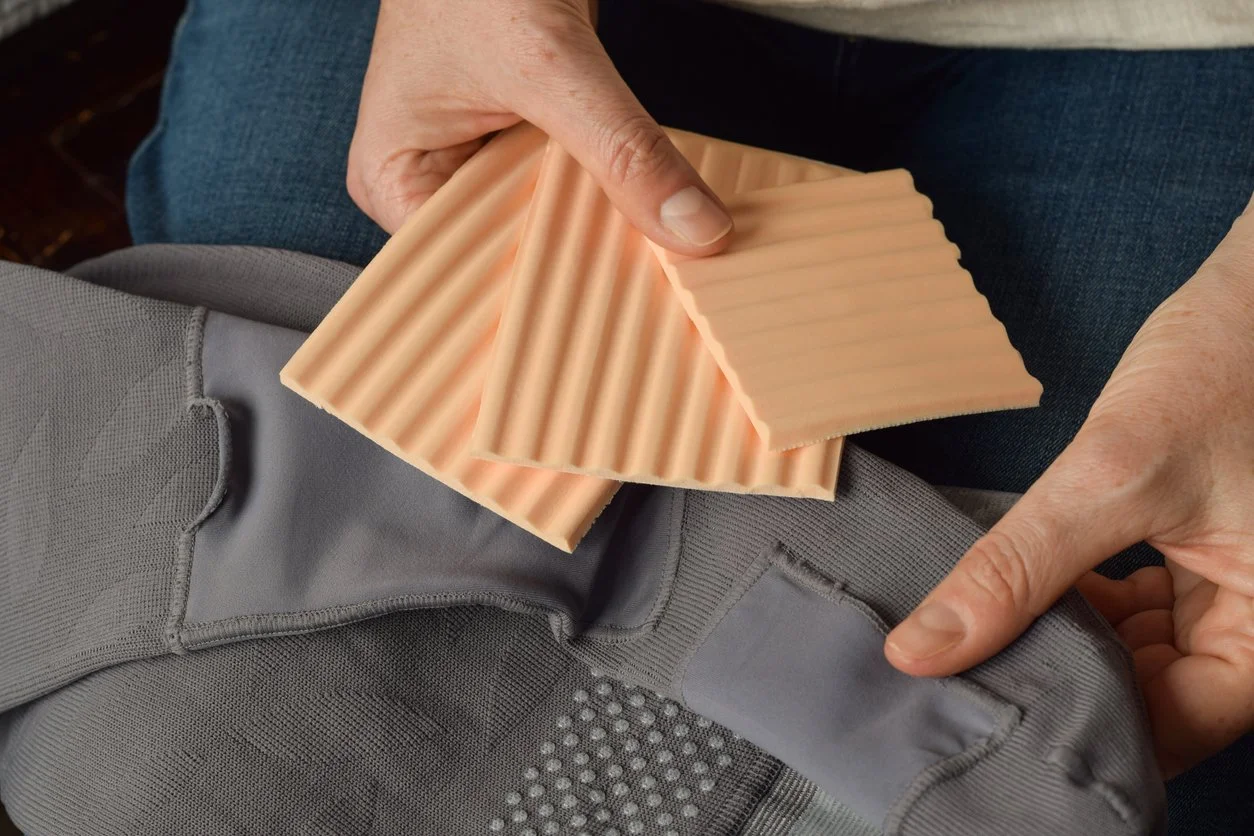
If you have started lymphedema treatment, you may have noticed that your therapist uses more than just bandages when wrapping your limb. Beneath the outer short-stretch bandages, there is typically a layer of foam padding — cut, shaped, or contoured to your specific limb — that is applied directly over a tubular stockinette liner. Patients often wonder what the foam is doing, why it is necessary, and whether the wrapping could work without it.
The foam is not incidental. It is one of the most clinically important components of a properly applied lymphedema bandage system, and understanding its purpose helps explain why the skill of your therapist — and the specificity of how the wrap is constructed — matters for your outcomes. At Thera Physical and Occupational Therapy in Midtown Manhattan, our Certified Lymphedema Therapists (CLTs) apply individualized wrapping as part of our Complete Decongestive Therapy (CDT) program. This guide explains the role of foam in that system.
The basic structure of a lymphedema bandage system
A therapeutic lymphedema bandage system is applied in layers, each serving a specific function. The complete system typically includes:
- A tubular stockinette liner applied directly to the skin, to protect it from friction and to allow the bandage layers above to be removed cleanly
- A layer of foam padding, applied over the stockinette — this is the component this post focuses on
- An outer layer of short-stretch compression bandages, applied over the foam, which provide the graduated compression that drives lymphatic and venous return
In some systems, a bandage liner (such as a Caresia or JoVi Pak) replaces the stockinette and foam combination with a single integrated garment. But in standard CDT bandaging, the foam layer is a distinct and essential component.
What the foam does
Evenly distributes compression
The most fundamental role of foam in a lymphedema wrap is to distribute the compression from the outer bandage layer evenly across the surface of the limb. A limb is not a cylinder. It has concave areas — the inner ankle, the back of the knee, the space between tendons and bony prominences — where direct bandage contact would apply uneven pressure. Without foam to fill those concavities, the outer bandage creates areas of excessive pressure over bony prominences and areas of inadequate pressure over recesses. This uneven compression is not merely uncomfortable — it can concentrate forces in ways that damage fragile tissue or create pressure injuries.
Foam fills the limb's contour irregularities, creating a more cylindrical shape over which the outer bandage can be applied with consistent, graduated tension. The result is a more uniform pressure gradient from distal to proximal — the controlled gradient that drives fluid in the right direction.
Protects bony prominences and sensitive areas
Bony prominences — the lateral malleolus at the ankle, the tibial crest along the shin, the olecranon at the elbow, the radial and ulnar styloids at the wrist — are areas where bandage pressure directly over bone can cause pain, pressure injury, or skin breakdown. Foam padding over these areas creates a buffer layer that distributes pressure away from the bony surface and onto the surrounding soft tissue, which can tolerate compression much more safely.
In lymphedema wrapping, specially shaped foam pieces — sometimes called "chips," "donut pads," or contoured inserts — are cut to fit precisely over the specific anatomy of the patient's limb. This level of customization is one of the skills that distinguishes a CLT's bandaging from a generic compression wrap.
Increases tissue pressure and supports fluid movement
Open-cell foam — the type most commonly used in lymphedema wrapping — has a specific mechanical property that makes it therapeutically active, not merely protective. When compressed by the outer bandage, open-cell foam generates a uniform tissue pressure across its contact area. As the patient moves and the muscles beneath the foam contract and relax, the foam responds dynamically — creating a gentle, rhythmic massage effect on the tissue beneath it.
This massage effect is not incidental. Lymphatic flow depends on the combined action of the lymphatic vessel walls' own contractions and external pressure from surrounding tissue. The rhythmic compression from foam beneath an active bandage system supports lymphatic pumping in a way that bandaging without foam cannot replicate.
Breaks down fibrous tissue
In patients whose lymphedema has progressed to involve fibrotic tissue — hardened areas beneath the skin where collagen has been deposited by the body's chronic inflammatory response — foam serves an additional therapeutic function. Specialized foam materials, particularly those with a rougher or more textured surface, create mechanical disruption of the fibrous deposits when compressed against them. Over time and with consistent wrapping, this repeated mechanical stimulus — combined with the MLD and manual soft tissue work performed in the session — can soften and reorganize the fibrotic tissue.
This is one of the reasons that foam selection is clinically individualized at Thera. A patient with early-stage lymphedema and no fibrosis requires a different foam type, thickness, and texture than a patient with established fibrosis in specific tissue areas. The foam your therapist selects is not arbitrary — it reflects their assessment of your tissue at that session.
Maintains skin health
Lymphedema-affected skin is at increased risk of breakdown, infection, and injury. The foam layer in a bandage system protects the skin from the direct mechanical friction of bandage edges and from the pressure changes that occur with movement. It also allows air circulation between the skin and the compression layer — reducing maceration risk in a wrap that may be worn for twelve to twenty-three hours per day during intensive treatment.
Types of foam used in lymphedema wrapping
Not all foam is interchangeable. The foam used in lymphedema bandaging is medical-grade and selected for specific properties:
- Open-cell foam — the most common type; compresses under the outer bandage and provides dynamic massage effect during movement. Available in multiple densities
- Chip foam (also called "chip bag" or SwellSpots) — irregular foam chips loosely contained in a fabric bag; creates highly variable pressure points that are particularly effective for softening fibrotic tissue
- Closed-cell foam — denser, less compressible; used over specific anatomical areas where firm, sustained pressure is required
- Contoured pre-cut pads — shaped foam pieces designed for specific anatomical sites such as the dorsum of the foot, the antecubital fossa, or the popliteal space behind the knee
Your CLT will select and combine foam types based on your limb's specific anatomy, the stage and character of your lymphedema, and the areas of fibrosis or tissue irregularity that require targeted treatment.
Why the foam must be applied correctly
Foam that is incorrectly applied does not simply underperform — it can cause harm. Foam placed too tightly over a bony prominence without adequate relief creates focal pressure injury. Foam applied without adequate smoothing creates wrinkles that generate pressure ridges on the skin beneath. Foam that is too thick under certain areas of the bandage can cause the outer bandage to be applied with uneven tension, creating a tourniquet effect rather than a therapeutic gradient.
This is why lymphedema bandaging — including the foam application — is a clinical skill taught formally in CLT training programs, not something that can be safely improvised from a tutorial. The multi-layer bandage system is a therapeutic device. Its construction matters as much as its components.
At Thera, our CLTs apply individualized bandaging during the intensive phase of CDT, and teach patients how to perform their own safe self-bandaging for overnight or between-session use as part of the education component of their program. Contact our team today to learn more about our lymphedema program and what treatment involves.
Foam is not filler in a lymphedema bandage system — it is a therapeutically active component that evens pressure distribution, protects vulnerable tissue, supports the muscle pump, and contributes to fibrosis breakdown. The type, placement, and customization of foam to the individual limb are clinical decisions made by a trained Certified Lymphedema Therapist based on your tissue assessment. When foam is applied correctly as part of a multi-layer CDT bandage system, it is one of the most effective tools available for reducing lymphedema volume and improving tissue quality.
If you are currently in lymphedema treatment and have questions about your bandaging, or if you are beginning treatment and want to understand what your care will involve, contact our team today to schedule an evaluation at our Midtown Manhattan clinic.
No referral needed · New York State allows direct access to physical and occupational therapy for up to 10 visits or one month without a physician's script.