
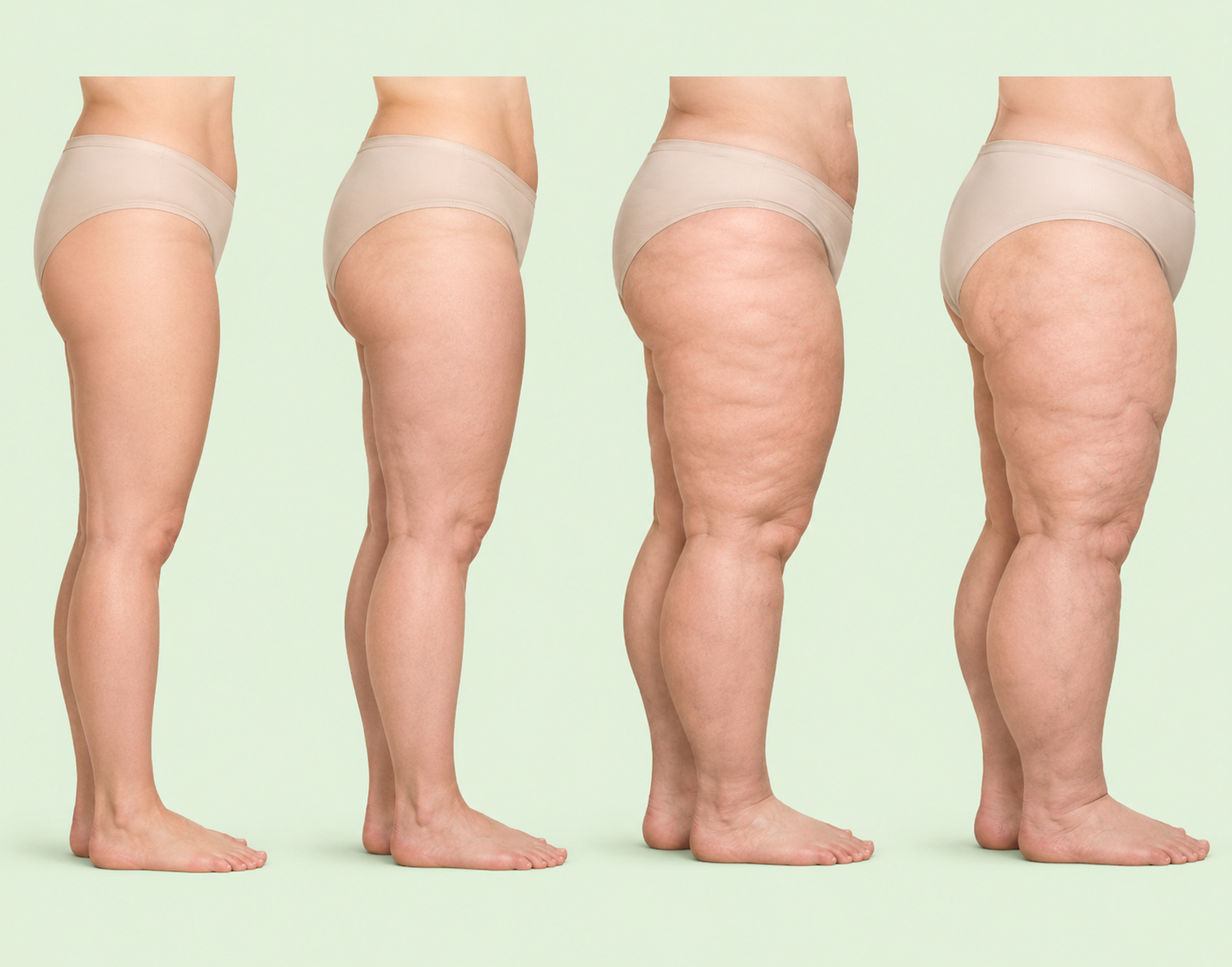
If you have recently been diagnosed with lipedema — or if you have been living with symptoms for years and are only now finding the right language for them — one of the most important things to understand is that lipedema is a progressive condition. It does not stay the same over time. It moves through stages, each with its own clinical presentation, its own treatment priorities, and its own implications for how urgently care should be sought.
Understanding where you are in that progression is not about fear. It is about informed decision-making. At Thera Physical and Occupational Therapy in Midtown Manhattan, we work with lipedema patients at every stage — from early presentation through complex lipolymphedema — and we find that patients who understand their own staging make better decisions about their care and advocate more effectively for themselves in medical settings where lipedema is still frequently misunderstood.
What lipedema staging tells you
Lipedema staging describes the structural state of the affected tissue — how the abnormal fat cells are organized, how the skin and underlying tissue have changed, and what is happening at the junction of the fat and the lymphatic system. Staging is not a measure of severity of pain or disability alone. A patient with Stage 1 lipedema can be in significant pain. A patient with Stage 3 lipedema may have adapted to their presentation over many years. What the stages describe is tissue structure — and tissue structure determines which treatment approaches are most effective.
The staging system most widely used clinically divides lipedema into four stages, with a separate category — lipolymphedema — describing the combination of lipedema and secondary lymphedema that develops in more advanced cases.
Stage 1: Smooth skin surface, internal nodularity
At Stage 1, the skin surface appears relatively smooth and normal. Beneath it, the lipedema fat tissue has begun to develop a characteristic nodular quality — small, pea-sized fat lobules that can be felt when the tissue is gently compressed. The affected limbs are already disproportionate to the rest of the body, but the difference may be subtle enough that it is easily attributed to normal variation or blamed on weight.
Pain and tenderness are already present at Stage 1, often significantly. The tissue bruises easily with minor contact. The bilateral, symmetrical pattern — both legs affected equally, with the feet and hands clearly spared — is the hallmark. Many patients at Stage 1 have already been seeking a diagnosis for years, having been told repeatedly that their symptoms are simply a result of weight or lifestyle.
What treatment looks like at Stage 1: This is the optimal window for conservative management. Manual Lymphatic Drainage reduces pain and inflammation and supports lymphatic function in the affected tissue. Compression therapy slows progression. Low-impact movement — aquatic therapy, cycling, walking — supports lymphatic return without triggering the inflammatory response that high-impact exercise causes in lipedema tissue. Treatment at Stage 1 is most likely to meaningfully slow disease progression.
Stage 2: Irregular skin surface, lobular fat
By Stage 2, the structural changes in the tissue have become visible at the skin surface. The characteristic texture of lipedema tissue — likened to mattress-like indentations, walnut shells, or orange peel — becomes palpable and visible. The fat lobules have grown larger and have organized into irregular, lobular formations that create visible contour changes. The skin may dimple or create depressions between fat lobules.
The limbs are now clearly and measurably disproportionate. Patients at Stage 2 typically have a marked size difference between the waist and the hips and legs that is not reducible with dietary change. Pain and tenderness continue. Fatigue in the affected limbs, particularly at the end of the day or after prolonged standing, becomes more pronounced.
What treatment looks like at Stage 2: Conservative management remains central. MLD sessions become more important as the lymphatic burden of the affected tissue increases. Compression garments — particularly flat-knit custom garments rather than standard circular-knit — become more clinically necessary as the irregular tissue contour makes standard sizing less effective. Occupational therapy begins to address the functional adaptations that the tissue changes require in daily life.
Stage 3: Large lobular deformations, redundant skin folds
Stage 3 lipedema involves significant structural deformation of the affected tissue. Large lobular formations of fat create folds of redundant skin — particularly around the inner thighs, knees, and lower abdomen — that can interfere with walking, hygiene, and skin integrity. The weight of the affected tissue itself becomes a functional issue, altering gait, increasing joint load, and contributing to secondary orthopedic problems in the knees, hips, and lower back.
Skin integrity becomes a significant management priority at Stage 3. The skin folds created by lobular tissue can trap moisture and create conditions favorable to skin breakdown, intertrigo, and infection. Infection in lipedema tissue carries the same risk as infection in lymphedema — the potential to trigger or worsen lymphatic compromise in already-burdened tissue.
What treatment looks like at Stage 3: Conservative management at Stage 3 is intensive and requires a skilled clinical team. MLD sessions focus on both symptom management and preventing the secondary lymphedema that the compromised lymphatic system is increasingly at risk of developing. Compression is complex at Stage 3 because of the irregular tissue contour — custom flat-knit garments are almost always required, and occupational therapy plays a significant role in adapting daily life to the functional demands of the tissue. Some patients at Stage 3 may be candidates for surgical intervention such as water-jet-assisted liposuction specifically designed for lipedema — a conversation with a specialist surgeon is appropriate at this stage.
Lipolymphedema: when lipedema and lymphedema occur together
Lipolymphedema is not technically a stage of lipedema — it is a separate designation for the combination of lipedema and secondary lymphedema that develops when the excess fat tissue in lipedema eventually overwhelms the lymphatic system's capacity to drain it. The lymphatic vessels in the affected tissue, already working harder than normal to manage the inflammatory environment created by abnormal fat cells, eventually begin to fail.
The clinical signs that lipedema has progressed to lipolymphedema include swelling that responds to elevation (unlike pure lipedema), pitting edema in the affected areas, skin changes consistent with lymphedema (thickening, fibrosis, positive Stemmer sign in some patients), and a notable change in the character of swelling — becoming reactive to heat, activity, and posture in ways that pure lipedema does not.
Treatment of lipolymphedema requires addressing both conditions simultaneously — the lipedema tissue and the lymphatic dysfunction that has developed on top of it. This is clinically complex and one of the areas where the dual training of our therapists at Thera — in both lymphatic management and lipedema-specific care — becomes most important. Learn more about our lymphatic care program.
The most important thing about lipedema staging
Every stage of lipedema is treatable. Conservative management — MLD, compression, movement, skin care, occupational therapy — can reduce symptoms, improve quality of life, and slow progression at any stage. Earlier is better, but later is still worth it.
The patients who present to us with the most frustration are not those with advanced-stage disease. They are those who spent years at Stage 1 or 2 being told nothing was wrong, that their symptoms were their own fault, that the answer was simply to eat less and move more. The tissue changes of lipedema do not respond to those interventions — and years spent pursuing them are years during which conservative treatment could have been slowing the progression.
If you have been diagnosed with lipedema and are not currently receiving clinical care, or if you are still seeking a diagnosis and recognizing your own experience in these descriptions, contact our team today. An assessment by a Certified Lymphedema Therapist at Thera will give you an accurate picture of where you are and what treatment looks like for your specific presentation.
Lipedema progresses through four structural stages — from smooth-skinned early presentation through significant tissue deformation — and can develop into lipolymphedema when the lymphatic system becomes secondarily involved. Understanding your stage matters because treatment priorities change at each stage, and because early intervention consistently produces better outcomes than waiting until the tissue changes are advanced. The condition is not your fault, and it is not untreatable. What it requires is accurate assessment by a clinician who understands it.
Whether you are newly diagnosed or have been living with lipedema for years without adequate support, contact our team today to schedule an evaluation at our Midtown Manhattan clinic.
No referral needed · New York State allows direct access to physical and occupational therapy for up to 10 visits or one month without a physician's script.