
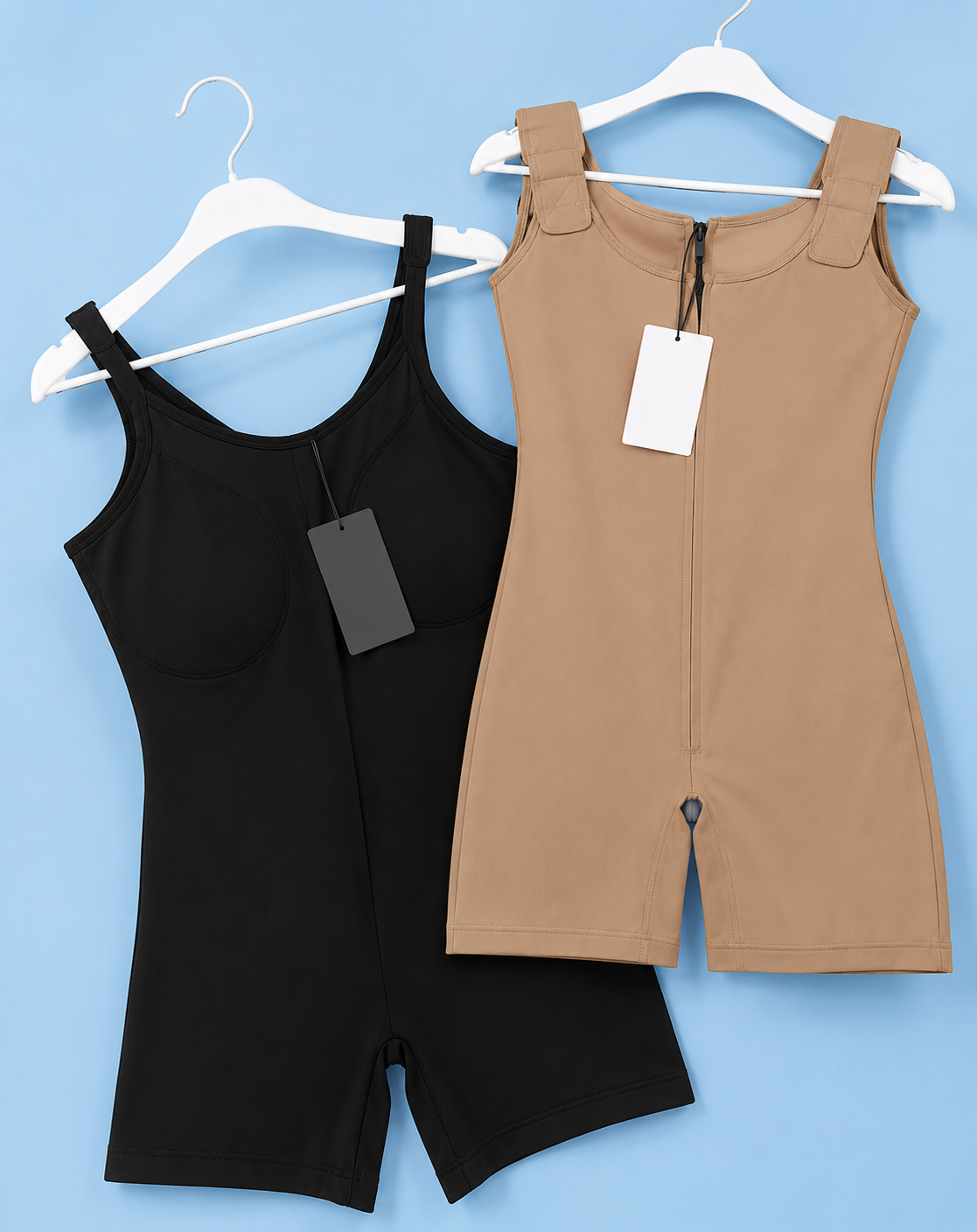
Your surgeon told you to wear a compression garment. Your physical therapist said you need one. You may have even been handed a prescription or a brand name. And now you are standing in front of your phone, scrolling through pages of options that look roughly the same, with no reliable way to know which one will actually work — and which one will roll down at the waist by noon, cut into the back of your knee on the subway, or create a pressure ridge across the exact area it is supposed to be treating.
Compression garments are a cornerstone of treatment for lymphedema, lipedema, post-surgical recovery, and venous insufficiency. They are also one of the most frequently mis-prescribed, ill-fitted, and prematurely abandoned components of care. A garment that does not fit correctly does not provide therapeutic compression — it provides the illusion of it, while potentially creating new problems in the process.
At Thera Physical and Occupational Therapy in Midtown Manhattan, compression garment fitting and assessment is a clinical service provided by our Certified Lymphedema Therapists (CLTs). This guide explains what professional garment fitting actually involves, why it matters for your outcomes, and why living and working in New York City creates specific garment demands that make getting this right even more important.
What compression garments are actually doing
A compression garment is not simply tight clothing. A properly prescribed and fitted therapeutic compression garment applies graduated pressure — meaning the compression is greatest at the most distal point of the limb (the hand or foot) and decreases progressively toward the body. This gradient mimics and supports the lymphatic and venous systems, encouraging fluid to move away from areas of congestion and back toward the core circulation.
For patients with lymphedema, compression prevents the re-accumulation of lymphatic fluid between treatment sessions and during the maintenance phase of care — when the lymphatic system is functioning better but still cannot fully compensate on its own. For post-surgical patients recovering from liposuction, a tummy tuck, or breast surgery, compression supports tissue adherence, reduces the risk of fibrosis, and maintains the contour achieved by surgery. For patients with lipedema, compression reduces pain, supports lymphatic function in affected tissue, and slows disease progression.
In each of these contexts, the garment only delivers its therapeutic effect if it fits correctly. Pressure that is uneven, inadequate, or in the wrong location does not move fluid — it redistributes it, sometimes into areas that make swelling worse. A garment that is too tight in one segment creates a tourniquet effect. One that is too loose provides no meaningful compression at all. And one that does not match the patient's limb shape — however close it may look to the right size — will shift during the day, leaving some areas under-compressed and others over-compressed.
Flat-knit vs circular-knit: why the construction of the garment matters
Not all compression garments are constructed the same way, and the difference between the two primary types — flat-knit and circular-knit — is not cosmetic. It is clinical.
Flat-knit
- Knitted row by row, with a visible seam
- Stiffer, higher "wall stability" — resists deformation under pressure
- Better for significant or established lymphedema, lipedema, or irregular limb shape
- Can be custom-made to any limb measurement
- Does not roll or collapse into skin folds
- Recommended by lymphedema specialists for moderate to severe presentations
Circular-knit
- Knitted seamlessly in a spiral — smoother and thinner
- More elastic and more comfortable for mild presentations
- Available in standard sizing; less customizable
- Appropriate for early-stage lymphedema, mild venous insufficiency, or post-surgical maintenance
- May shift, roll, or collapse into skin folds if the limb shape is irregular
- Better tolerated for daily wear in warmer conditions
The choice between flat-knit and circular-knit is a clinical decision based on the stage of your condition, the shape of your limb, your skin quality, and your daily life. It is not a preference — and it is not something that can be determined from a size chart. A CLT making this decision is drawing on their assessment of your tissue, their measurement of your limb at multiple points, and their understanding of how different garment constructions perform under the specific demands of your condition.
Most garments available without a fitting — online, at a pharmacy, or even from some medical supply stores — are circular-knit in standard sizes. For patients with established lymphedema, irregular limb contours, or lipedema, these garments are routinely inadequate and sometimes counterproductive. The National Lymphedema Network recommends that patients with lymphedema be fitted by a trained therapist and obtain garments that are appropriate to their stage of disease.
What professional fitting at Thera involves
Compression garment fitting at Thera is not a retail transaction. It is a clinical assessment that takes place in the context of your full treatment picture — your diagnosis, your current limb measurements, your tissue condition, your occupational demands, and the practical realities of your daily life.
Precise limb measurement
Your therapist will take circumferential measurements of your limb at multiple standardized points — typically every four centimeters from the most distal to the most proximal segment of the limb being fitted. These measurements are the foundation of every garment decision that follows. They determine whether a ready-to-wear garment in a standard size can provide appropriate fit, or whether a custom-made garment is necessary. They also become part of your permanent record — so that future garments can be compared to baseline and any changes in limb volume can be tracked objectively.
Tissue and skin assessment
The measurement numbers alone do not capture the full picture. Your therapist will also assess the quality and texture of the tissue — whether fibrosis is present, whether the skin is fragile or sensitive, whether there are significant size differences between segments of the limb that would affect how a garment sits — and will take this into account in the garment recommendation. Patients with lipedema, for example, often have limb shapes that do not conform to standard sizing at all, making custom flat-knit garments a clinical necessity rather than a preference.
Compression class and garment selection
Therapeutic compression garments are prescribed in classes — typically ranging from Class I (lighter compression, 18–21 mmHg in flat-knit, 20–30 mmHg in circular-knit) through Class III and beyond for severe presentations. The appropriate class is determined by the stage and severity of your condition, not by what is most commonly available or most comfortable. Your therapist will recommend the compression class indicated by your clinical presentation, and then select the specific garment — brand, style, construction, and features — that best matches your limb shape and daily life.
Donning, doffing, and care education
A garment that cannot be put on correctly provides no therapeutic benefit. Your therapist will demonstrate how to don and doff your garment properly — including the use of application aids for patients with limited hand strength or dexterity — and will instruct you on how to care for it to maintain its compression properties over time. Most therapeutic compression garments have a lifespan of approximately six months with proper washing and care, and your therapist will help you plan for timely replacement.
Why New York City makes garment selection uniquely demanding
Compression garment compliance — actually wearing the garment consistently — is the single most important factor in whether it works. And the conditions of daily life in New York City create a set of garment demands that patients in other environments do not face to the same degree.
Heat and humidity. Manhattan summers are aggressive. The subway platform at 34th Street in July can feel like a different climate than the office you are walking to. Compression garments trap heat against the skin, and a garment that becomes unbearable to wear in July is a garment that will end up in a drawer. Your therapist will factor seasonal conditions into the garment recommendation — fiber content, breathability, and the balance between therapeutic compression class and realistic wearability in the heat matter more here than they might in a climate-controlled suburban environment.
Walking. The average Manhattan commuter walks significantly more than the national average. Walking activates the calf muscle pump, which works in concert with compression to drive lymphatic and venous return — but it also means the garment is under constant mechanical demand throughout the day. A garment that fits correctly at the start of the morning needs to maintain its position, its compression gradient, and its structural integrity through several miles of walking, multiple flights of stairs, and the particular athletic demands of navigating a busy city on foot.
The subway and commuting. Sitting for extended periods — on the train, in a cab, at a desk — is the condition under which compression garments are most tested. Prolonged sitting increases venous and lymphatic pooling in the lower extremities, and a garment that provides adequate compression when you are standing may shift or lose its gradient when you sit. This is particularly relevant for patients with lower extremity lymphedema or lipedema who spend significant time commuting.
Professional and social demands. Many of our patients are professionals who need a garment that functions under a suit, a dress, or business attire — not one that creates visible lines, bunches under clothing, or requires adjustment throughout the day. Your therapist will take your wardrobe and professional context into account when recommending a garment, because compliance with a garment that works aesthetically in your life is always better than a theoretically superior garment that you will not wear.
When to replace your compression garment
Compression garments lose their therapeutic compression over time as the elastic fibers fatigue. Most quality therapeutic garments should be replaced approximately every four to six months with daily wear — sooner if you notice that the garment has become easier to put on, feels looser than it did initially, or no longer maintains its position throughout the day. These are signs that the elastic has fatigued and the garment is no longer delivering its prescribed compression class.
Patients often underestimate how quickly garments lose efficacy and continue wearing a garment that looks intact but provides little clinical benefit. Your therapist at Thera will re-measure your limb at each garment fitting appointment, ensuring that the new garment is based on your current measurements — which may have changed since your last fitting, particularly if your lymphedema management has been progressing well and limb volume has reduced.
Compression garment fitting at Thera in NYC
At Thera Physical and Occupational Therapy, compression garment fitting and assessment is offered as part of our lymphatic care services and is integrated into treatment for lymphedema, lipedema, and post-surgical recovery. Our CLTs bring specialized training in garment selection for complex presentations — including patients with lipedema who require custom flat-knit garments, patients with irregular limb shapes following surgery or radiation, and patients who have previously been fitted with garments that were not working.
We do not fit garments in isolation from your clinical picture. Garment recommendations at Thera are made in the context of your full assessment — your diagnosis, your current swelling status, your tissue quality, your treatment history, and your daily life in New York City. Sessions are always one-on-one. Our clinic is at 115 West 30th Street in Midtown Manhattan, steps from Penn Station and accessible from across the Tri-State Area.
If you have been told you need a compression garment and are not sure where to start — or if you have a garment that is not working the way it should — contact our team today to schedule a fitting and assessment.
A compression garment is only therapeutic if it fits correctly, applies the right compression class, and is worn consistently. Professional fitting by a Certified Lymphedema Therapist is what makes the difference between a garment that actually works and one that looks the part but fails to deliver. In New York City — where heat, distance, commuting, and professional demands create real compliance challenges — getting the garment right from the beginning is not optional. It is the foundation on which everything else in your lymphatic or post-surgical care is built.
Whether you need a compression garment for lymphedema, lipedema, post-surgical recovery, or venous insufficiency — or you have one that is not fitting or performing as it should — contact our team today to schedule a professional fitting at our Midtown Manhattan clinic.
No referral needed · New York State allows direct access to physical and occupational therapy for up to 10 visits or one month without a physician's script.