
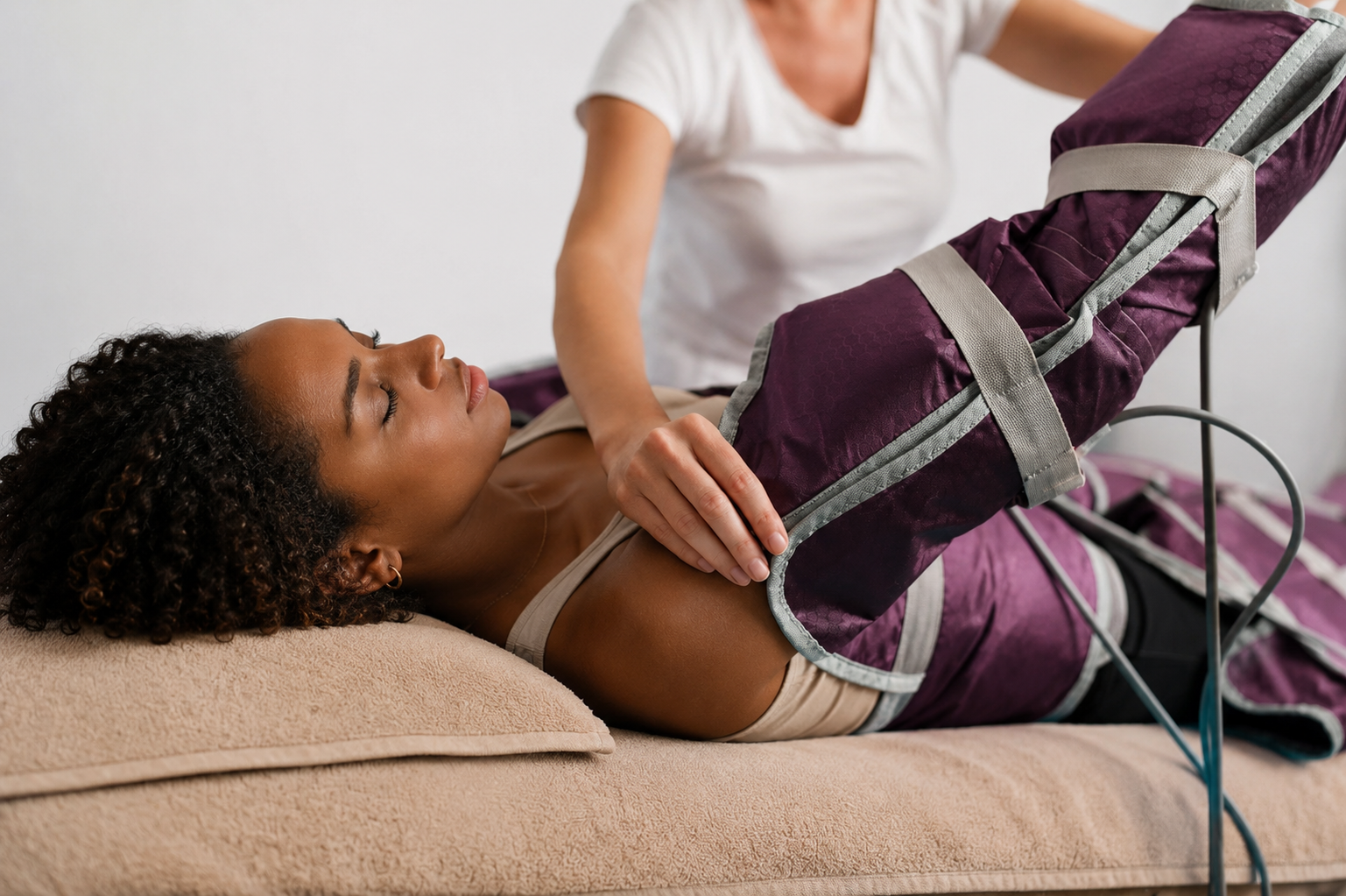
If you are managing lymphedema, you may have heard about pneumatic compression pumps — sometimes called lymphedema pumps, compression sleeve devices, or intermittent pneumatic compression (IPC) devices. You may have seen them advertised, had one recommended by a physician, or been issued one through insurance. You may also have been unsure how it fits with the rest of your treatment, whether it is working, or whether you are using it correctly.
Pneumatic compression pumps are a real and useful tool in lymphedema management — but they are frequently misunderstood, misused, or used in place of more fundamental interventions they cannot replace. At Thera Physical and Occupational Therapy in Midtown Manhattan, our Certified Lymphedema Therapists (CLTs) regularly help patients understand how pneumatic compression fits into a comprehensive treatment program — and when it helps, when it does not, and why the device alone is never the whole answer.
What a pneumatic compression pump is and how it works
A pneumatic compression pump consists of a sleeve or garment that fits over the affected limb, connected by tubing to a motorized pump unit. The pump inflates chambers within the sleeve in sequence — from the most distal part of the limb toward the proximal — creating a wave of pressure that mechanically moves fluid up the limb. When the sequence is complete, the chambers deflate and the cycle begins again.
The mechanism mimics, in a simplified way, the graduated sequential compression that a therapist's hands create during Manual Lymphatic Drainage. The pump cannot replicate the anatomical specificity, the assessment-guided technique, or the tissue responsiveness of professional MLD — but it can apply rhythmic, sequenced compression to a limb for extended periods that clinical sessions alone cannot provide.
Several categories of devices exist, with clinically meaningful differences between them:
Non-programmable single-chamber pumps
These devices have one compartment that inflates and deflates. They apply uniform pressure across the entire limb simultaneously, rather than in a graduated sequence. This is the most basic category and is now considered inadequate for most lymphedema presentations — simultaneous inflation does not reproduce the proximal-to-distal pressure gradient needed for effective lymphatic propulsion, and can actually drive fluid into proximal limb segments before it can drain.
Non-programmable multi-chamber sequential pumps
Multi-chamber sequential devices inflate and deflate multiple chambers in sequence — typically from the hand or foot upward. This graduated sequential compression more closely replicates the mechanism of MLD than single-chamber devices. These are the most commonly prescribed devices for home use and represent the clinical standard for pump-based lymphedema management for most patients.
Programmable (calibrated) pumps
Advanced programmable devices allow individual adjustment of pressure in each chamber, duration of inflation cycles, and sequencing patterns. These are recommended for patients with significant scarring or contractures, highly sensitive skin, or complex presentations where standard sequential compression is insufficient or uncomfortable. Insurance coverage typically requires documentation that non-programmable devices were inadequate before a programmable pump is covered.
Advanced pneumatic compression devices (APCDs)
A newer category of devices extends compression beyond the limb alone, incorporating trunk and chest garments that can address the lymphatic pathways proximal to the limb — including the axilla, chest wall, and trunk. These devices are intended for patients whose lymphedema is more complex or whose limb compression must be preceded by clearing of the central drainage zones. Evidence for their additional benefit over standard sequential limb devices is growing but still developing.
What pumps can and cannot do
Understanding the scope and the limits of pneumatic compression is essential for using it appropriately and for recognizing when something more is needed.
What pumps can do
- Apply rhythmic, sequential compression to move fluid proximally in the limb during the session
- Provide additional compression therapy in the hours between clinical sessions and overnight — extending the volume reduction effect of professional MLD
- Reduce subjective symptoms of heaviness and tightness, particularly for lower extremity lymphedema
- Support the maintenance phase of CDT when used correctly alongside garments and home self-drainage
- Serve as a useful adjunct for patients who struggle with self-bandaging or who need more compression therapy than clinical sessions alone can provide
What pumps cannot do
- Perform Manual Lymphatic Drainage — pumps apply mechanical compression to the limb but do not clear the central lymphatic pathways (neck, trunk, axilla) the way professional MLD does. Without this central clearance, fluid mobilized from the limb has limited capacity to drain
- Replace Complete Decongestive Therapy — the clinical evidence consistently shows that pumps work best as an adjunct to CDT, not as a replacement. A meta-analysis found that incorporating IPC with CDT enhances outcomes beyond CDT alone; the same evidence does not support IPC as a standalone treatment for most patients
- Address fibrotic tissue — mechanical compression moves fluid but does not break down the collagen deposits and tissue adhesions that characterize Stage 2 and Stage 3 lymphedema. This requires hands-on manual soft tissue work from a trained therapist
- Self-adjust based on tissue response — a pump applies its programmed pressure regardless of how the tissue is responding. A CLT adjusts technique in real time based on what they feel and observe. This clinical intelligence cannot be programmed into a device
Important warnings: when pumps should not be used
Pneumatic compression pumps have specific contraindications that must be respected. Using a pump in the presence of any of the following without clinical guidance is contraindicated and potentially harmful:
- Active infection or cellulitis in the affected limb — compression during active infection can drive bacteria into deeper tissue. If the limb is red, warm, rapidly swelling, or showing signs of cellulitis, seek medical care before using the pump.
- Congestive heart failure or significant cardiac disease — pumps move fluid proximally into the central circulation. In patients with compromised cardiac function, this fluid load can precipitate or worsen heart failure. Medical clearance from a cardiologist is required.
- Deep vein thrombosis (DVT) or acute clot — compression over a limb with an active clot can dislodge it. DVT must be excluded by imaging before beginning pump therapy.
- Peripheral arterial disease — compression in a limb with compromised arterial inflow can further reduce perfusion. Ankle-brachial index (ABI) testing is required before pump use in patients with peripheral vascular disease.
- Malignancy in the affected area — pump use in or adjacent to active cancer is generally contraindicated without oncologist guidance, due to concerns about lymphatic mobilization of circulating tumor cells.
- Acute inflammation or thrombophlebitis — compression over acutely inflamed superficial veins is contraindicated.
- Open wounds or skin breakdown in the area to be compressed.
- Pump use without trunk clearance first — using a limb pump without first clearing the central lymphatic pathways (typically through neck and trunk MLD or breathing exercises) may drive fluid into the root of the limb where it cannot drain. This is one of the most common errors in unsupervised pump use.
How to use a pump correctly: the preparation sequence
For patients who have been prescribed a pneumatic compression pump as part of their lymphedema management, the most important principle is: prepare the drainage pathways before starting the pump.
A pump that mobilizes fluid from the hand or foot into the upper arm or thigh is only beneficial if there is capacity for that fluid to continue draining. If the lymph nodes at the root of the limb — the axilla for the arm, or the groin for the leg — are congested, compressed, or fibrotic, driving more fluid toward them worsens the bottleneck rather than clearing it.
The correct preparation sequence before using a pump:
- Diaphragmatic breathing — five to ten slow diaphragmatic breaths to activate thoracic duct drainage and create central capacity (see our post on diaphragmatic breathing for lymphatic health)
- Neck and trunk clearance strokes — the first movements of Simple Lymphatic Drainage, which clear the cervical nodes and prepare the terminal drainage points before peripheral fluid is mobilized
- Then use the pump — with the drainage pathways prepared, the pump's mechanical mobilization of limb fluid has clear capacity to continue proximally
- After the pump session — apply your compression garment immediately before significant re-accumulation occurs
Your CLT at Thera will teach you this preparation sequence as part of your home management education. Using the pump without this preparation is not dangerous in most cases, but it significantly reduces the pump's effectiveness.
Pumps and the maintenance phase of CDT
The most appropriate role for a pneumatic compression pump in most patients' care is during the maintenance phase of CDT — after the intensive phase has reduced limb volume and the patient has transitioned from bandaging to compression garments. In this phase, daily pump sessions (typically one to two hours) can supplement garment wear and help maintain the volume reductions achieved during intensive treatment.
For patients who have significant difficulty with self-bandaging, or who have heavy occupational or lifestyle demands that make consistent garment compliance difficult, a pump session in the evening can provide the additional compression therapy that bandaging would otherwise supply overnight. This is a clinical decision to be made with your CLT based on your specific presentation, lifestyle, and response to treatment.
Lymphedema pump guidance at Thera in NYC
At Thera Physical and Occupational Therapy, we guide patients on pneumatic compression pump use as part of our comprehensive lymphedema management program. This includes advising on appropriate device selection, teaching the correct preparation sequence, integrating pump use with clinical MLD sessions and garment protocols, and monitoring whether the pump is producing the expected results.
If you have a pump and are not sure whether you are using it correctly, or if you have been told a pump is appropriate for your lymphedema and want clinical guidance on how it fits into a full treatment program, contact our team today to schedule an evaluation at our Midtown Manhattan clinic.
Pneumatic compression pumps are a legitimate and useful tool in lymphedema management — but they are an adjunct, not a treatment in themselves. The clinical evidence supports pump use as an addition to Complete Decongestive Therapy, not a replacement for it. Pumps move fluid in the limb but do not clear the central drainage pathways, address fibrotic tissue, or respond to tissue changes the way a skilled therapist can. Used correctly — with proper preparation of the drainage pathways, integrated with CDT, and monitored by a CLT — a pump can meaningfully extend the volume reduction achieved in clinical sessions. Used in isolation, without clinical oversight, or in the presence of contraindications, it may be ineffective or harmful.
If you have a pneumatic compression pump and want guidance on using it correctly, or want to understand whether pump therapy is appropriate for your lymphedema presentation, contact our team today to schedule an evaluation at our Midtown Manhattan clinic.
No referral needed · New York State allows direct access to physical and occupational therapy for up to 10 visits or one month without a physician's script.