
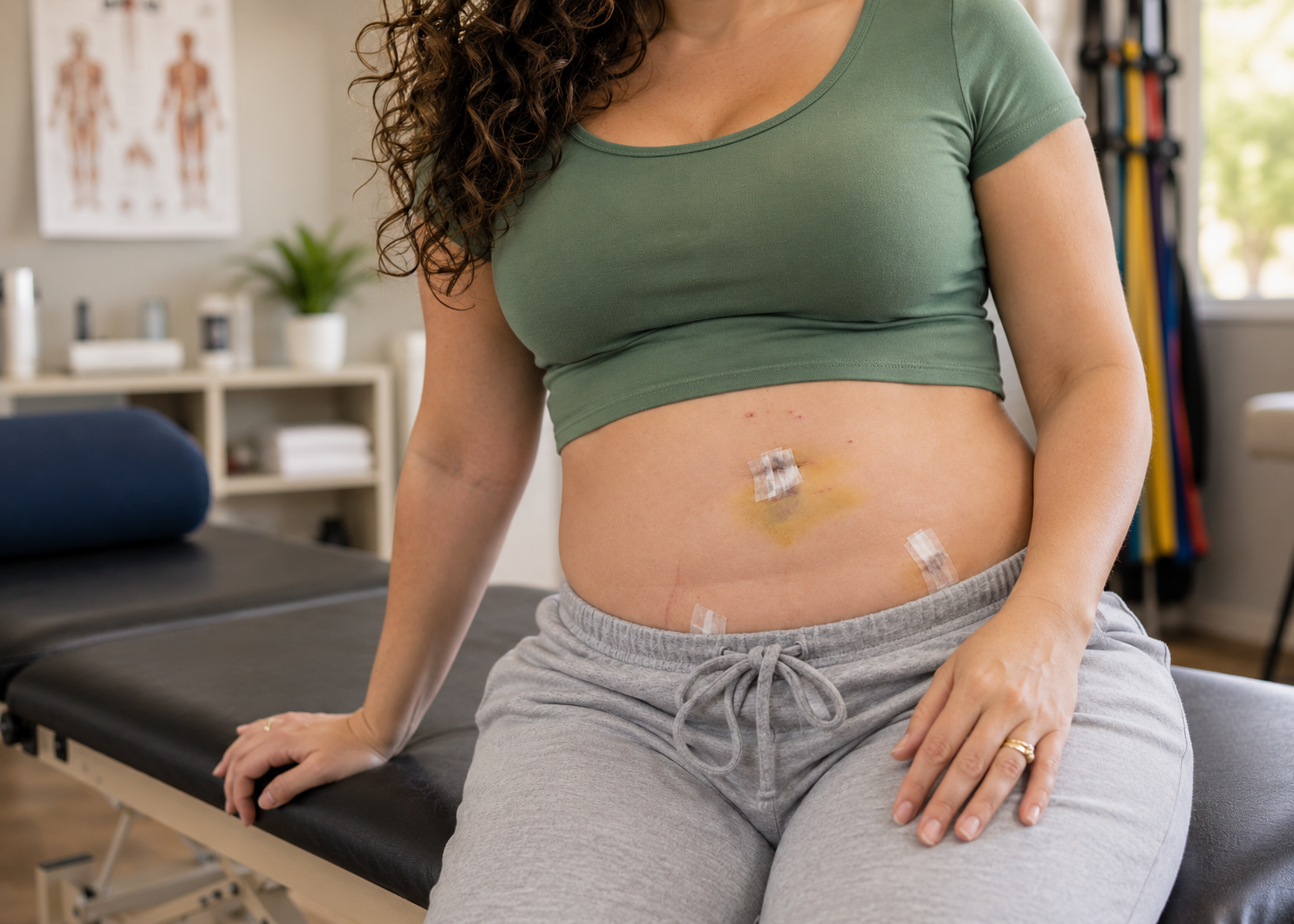
For some women, a breast cancer diagnosis leads to a second surgery — one that may not have been on the horizon at all before the cancer was found. Hysterectomy, bilateral salpingo-oophorectomy (removal of both ovaries and fallopian tubes), or both together are recommended for some breast cancer patients based on their genetic profile, disease history, or hormone management needs. For women who carry BRCA1 or BRCA2 mutations, risk-reducing surgery to remove the ovaries and fallopian tubes is a standard recommendation that arrives alongside or after breast cancer treatment. For others, ovarian removal is advised as part of managing hormone receptor-positive disease.
The physical recovery from hysterectomy and oophorectomy is significant in its own right — involving major abdominal surgery, core rehabilitation, pelvic floor changes, and an immediate hormonal shift that can be more abrupt than any other form of treatment-induced menopause. When it occurs in the context of an existing breast cancer diagnosis and ongoing treatment, that recovery happens on top of everything else the patient is already managing.
At Thera Physical and Occupational Therapy in Midtown Manhattan, we support patients through exactly this intersection of recoveries — addressing the physical rehabilitation needs of gynecologic surgery while accounting for the breast cancer context, any lymphedema risk, ongoing hormonal therapy, and the occupational demands of a patient whose life has been significantly disrupted by multiple simultaneous medical events.
Why hysterectomy and oophorectomy happen in the breast cancer context
Understanding why this surgery is recommended helps clarify what the recovery involves and what physical therapy needs to address.
BRCA mutation carriers
Women who carry pathogenic variants of the BRCA1 or BRCA2 genes face significantly elevated risks of both breast cancer and ovarian cancer. BRCA1 carriers have up to a 39–46% lifetime risk of ovarian cancer; BRCA2 carriers face a 10–27% risk. Because ovarian cancer is difficult to detect early and carries a poor prognosis, risk-reducing bilateral salpingo-oophorectomy (RRBSO) is recommended for BRCA carriers — typically after childbearing is complete, and often in conjunction with prophylactic or therapeutic breast surgery. For a BRCA-positive woman who has already had breast cancer, the oophorectomy typically follows her breast treatment, adding a significant surgical recovery to an already demanding journey.
Ovarian suppression and hormone receptor-positive disease
For premenopausal women with hormone receptor-positive breast cancer, removing the ovaries is sometimes recommended as a means of definitive ovarian suppression — stopping estrogen production at its source more reliably than medication alone. This may be recommended when GnRH agonist injections are not tolerated, when more complete ovarian suppression is needed, or when surgical menopause is otherwise clinically appropriate.
Uterine or gynecologic concerns in the breast cancer context
Tamoxifen — widely used in premenopausal breast cancer management — is associated with an increased risk of endometrial changes, including endometrial hyperplasia and, rarely, endometrial cancer. Some patients who have been on tamoxifen for extended periods may require hysterectomy to address these uterine changes alongside their breast cancer management.
What the surgery involves physically
Hysterectomy and bilateral salpingo-oophorectomy are major pelvic surgeries, most commonly performed laparoscopically (minimally invasive) or robotically, though open abdominal approaches are still used in some cases. The physical recovery involves:
- Healing of the surgical incisions (laparoscopic port sites or abdominal incision) and internal pelvic sutures
- Resolution of surgical swelling in the pelvis and lower abdomen
- Restoration of core and pelvic floor function disrupted by the surgery
- Adaptation to the immediate hormonal changes that follow oophorectomy
- Gradual return to daily activities, lifting, exercise, and work
When oophorectomy is performed, the hormonal change is immediate and permanent. Unlike chemotherapy-induced menopause — which may be reversible and develops over weeks — surgical menopause begins the day of surgery. Hot flashes, night sweats, vaginal dryness, mood changes, and joint symptoms can begin within days. This abrupt hormonal shift, layered on top of surgical recovery, is one of the most physically demanding aspects of oophorectomy in the breast cancer context.
How physical and occupational therapy support hysterectomy recovery
Abdominal and core rehabilitation
Hysterectomy — whether laparoscopic or open — disrupts the abdominal wall and pelvic structures. The muscles of the deep core (transversus abdominis, pelvic floor, diaphragm, multifidus) are functionally compromised by both the surgery itself and the protective guarding that develops afterward. Without rehabilitation, this disruption contributes to chronic low back pain, pelvic instability, and the persistent weakness that many patients describe months after surgery.
Your physical therapist at Thera will guide you through a staged core rehabilitation program — beginning with neuromuscular re-education of the deep abdominal and pelvic muscles in the early post-surgical weeks, and progressing through increasingly demanding core strengthening as healing advances and your surgeon clears more vigorous activity. This progression is sequenced carefully to avoid placing excessive load on healing pelvic structures before they are ready.
For patients who have also had a previous lumpectomy, mastectomy, or reconstruction, the core rehabilitation must account for any chest wall restrictions, scar adhesions, or lymphedema considerations that affect how the trunk moves and loads. This integration across two surgical recoveries is one of the distinctive competencies that a breast cancer rehabilitation specialist brings to this patient population.
Scar management
Laparoscopic port site scars and any abdominal incision from open hysterectomy require the same evidence-based scar management approach as any post-surgical scar: medical-grade silicone once the incision is fully closed, and professional scar mobilization from a trained therapist to prevent adhesions and restore tissue mobility between layers. For patients who have also had abdominal surgery for breast reconstruction (such as DIEP flap), scar management across multiple abdominal sites requires coordinated clinical attention.
Managing surgical menopause symptoms through PT and OT
The immediate menopausal symptoms that follow oophorectomy — particularly joint pain, fatigue, sleep disruption, and mood changes — can be severe in the first weeks and months. For patients who are simultaneously recovering from surgery and experiencing abrupt surgical menopause, the physical and occupational therapy interventions described in our companion post on managing menopause side effects during breast cancer treatment apply directly.
Energy conservation during the recovery period — when both surgical healing and hormonal adjustment demand significant physiological resources — is one of the most important occupational therapy contributions. Your OT at Thera will help you structure your daily activities to support recovery without depleting the energy reserves needed for healing.
Bone health from day one of surgical menopause
Surgical oophorectomy produces an immediate and complete estrogen withdrawal — the most abrupt bone-resorption stimulus that exists short of corticosteroid treatment. The bone-protective exercise program described in our companion post on bone density loss and physical therapy is especially urgent after oophorectomy, because the rate of bone loss in the first two years following surgical menopause is among the highest experienced in any clinical context.
Your physical therapist will begin the bone-protective exercise program — calibrated to your post-surgical status — as soon as you are cleared for progressive activity, and will design its progression to account for the healing demands of the pelvic surgery alongside the bone health goals.
Return to daily function, work, and activity
Hysterectomy and oophorectomy recovery involves specific functional milestones that occupational therapy supports directly: returning to lifting (typically restricted to under 10 pounds for the first four to six weeks), resuming driving, returning to work (with or without modifications depending on physical demands), managing childcare and household responsibilities, and reintegrating into the exercise and social routines that support wellbeing. For patients who are simultaneously on active breast cancer treatment — chemotherapy, radiation, or hormonal therapy — the return to daily function is even more carefully staged.
Coordinating two recoveries: breast cancer and gynecologic surgery
One of the most practically important things about hysterectomy in the breast cancer context is that it rarely happens in isolation. The patient managing this surgery is also managing breast cancer treatment, its side effects, the psychological weight of a double diagnosis or a dual surgical recovery, and often ongoing hormonal therapy that is producing its own physical symptoms.
Physical and occupational therapy that is alert to this full context — that understands how lymphedema risk affects exercise selection, how breast surgery affects core mechanics, how aromatase inhibitor joint pain overlaps with post-surgical deconditioning, and how fatigue from multiple sources compounds — provides qualitatively different care than treatment that addresses each component in isolation.
At Thera, this integration is what breast cancer rehabilitation means in practice. We do not treat the hysterectomy recovery separately from the breast cancer recovery. We treat the whole patient across the full arc of what they are managing.
Rehabilitation after hysterectomy at Thera in NYC
At Thera Physical and Occupational Therapy, our therapists are trained in breast cancer rehabilitation and post-surgical recovery — including the specific considerations that arise when hysterectomy or oophorectomy occurs in the breast cancer context. We provide core rehabilitation, scar management, bone-protective exercise programming, surgical menopause symptom management through PT and OT, and the occupational support that makes the daily reality of multiple simultaneous recoveries manageable.
Our clinic is at 115 West 30th Street in Midtown Manhattan, steps from Penn Station. Sessions are always one-on-one. No referral is needed. If you are recovering from hysterectomy or oophorectomy in the context of a breast cancer diagnosis, contact our team today.
Hysterectomy and bilateral oophorectomy in the breast cancer context require rehabilitation that accounts for two recoveries simultaneously — not just the pelvic surgery, but the breast cancer treatment, any lymphedema considerations, the abrupt hormonal shift of surgical menopause, and the occupational demands of a patient whose daily life has been significantly disrupted. Core rehabilitation, scar management, bone-protective exercise, menopause symptom management, and structured return to function are all components of what PT and OT provide. This intersection of recoveries is complex — but it is manageable with the right clinical support, starting at the right time.
If you are recovering from hysterectomy or oophorectomy in the context of breast cancer and want clinical support for your rehabilitation, contact our team today to schedule an evaluation at our Midtown Manhattan clinic.
No referral needed · New York State allows direct access to physical and occupational therapy for up to 10 visits or one month without a physician's script.