
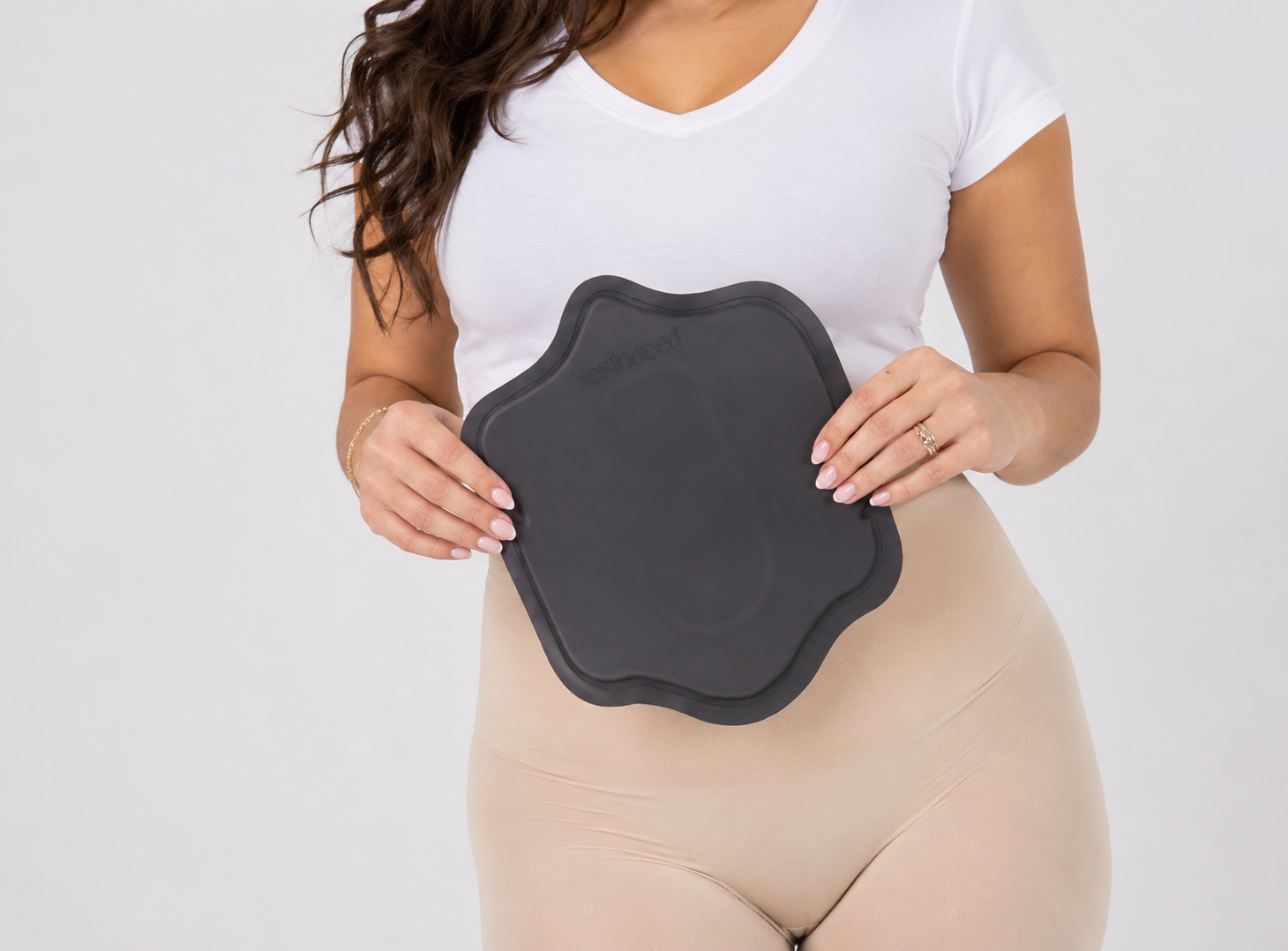
If you have had liposuction — particularly abdominal lipo, a tummy tuck, or a combination body contouring procedure — there is a good chance you were sent home with, or told to purchase, a lipo board. Also called a foam board, abdominal board, or compression board, this flat rectangular piece of firm foam is a standard recovery tool. And yet most patients receive almost no guidance on how to use it correctly, when to wear it, or what it actually does.
This matters, because the lipo board is frequently misunderstood. Patients often believe it will make their stomach flatter or sculpt their results — it will not. Others wear it too early, too tightly, or in the wrong position, which can create new problems rather than support healing. Used correctly and at the right time, however, a lipo board plays a meaningful role in reducing seroma risk, supporting your compression garment, and helping tissue heal in a smooth, even plane.
At Thera Physical and Occupational Therapy in Midtown Manhattan, our physical and occupational therapists work with patients recovering from liposuction and body contouring procedures throughout the entire recovery process. Here is what you actually need to know about your lipo board.
What a Lipo Board Is — and What It Is Not
A lipo board is a firm, flat piece of foam — typically made of high-density polyurethane — that is worn inside your compression garment, against the skin, over the treated area. Its primary functions are structural: it distributes the compression from your garment more evenly across the surface of the treatment zone, prevents the garment from folding, bunching, or creating uneven pressure ridges, and provides a stable flat surface against the tissue underneath.
A lipo board will not make your stomach flatter. This is one of the most common misconceptions patients bring to us. The board does not reshape tissue. It does not sculpt your abdomen. It does not compress fat into a new position. Your surgical result was determined in the operating room. What the board does is create uniform, even compression so that the tissue heals without the interference of garment distortion — which can cause irregular swelling, pressure marks, and uneven healing if left unchecked.
Think of the board as a template for even healing, not a sculpting tool.
What Phase Should You Wear the Lipo Board?
Phase 1: Acute Recovery (Days 1–7)
In the first week after surgery, the treated area is acutely inflamed, tender, and often producing significant drainage. Most surgeons do not recommend introducing the lipo board in this phase. Your surgeon's binder or compression garment alone is appropriate. The tissue is too swollen and sensitive for additional rigid compression, and drainage ports (if present) need to remain accessible.
Do not introduce the lipo board without explicit clearance from your surgeon. Every surgery is different, and your surgeon's post-operative protocol takes precedence over any general timeline.
Phase 2: Early Healing (Weeks 2–4)
This is typically when the lipo board is introduced — generally around the one-to-two-week mark, once acute drainage has slowed and the tissue has begun initial healing. The board is worn inside the compression garment over the treated area. In this phase, the board's primary role is to prevent the garment from creating ridges or indentations and to distribute pressure evenly as the underlying tissue begins to consolidate.
This is also when seroma risk is highest — which is discussed in more detail in our companion article on seromas after liposuction. Consistent, even compression during this phase is one of the most important things you can do to reduce the likelihood of fluid accumulation.
Phase 3: Ongoing Recovery (Weeks 4–8+)
As acute swelling reduces and the tissue layers begin to adhere to one another, the board continues to support that adherence process by maintaining even contact between skin and underlying structures. This is still fundamentally a seroma and tissue-adherence role — not a fibrosis treatment. If fibrosis is developing in this phase, that requires a different intervention altogether: the irregular, multidirectional pressure of foam chip bag inserts, hands-on manual therapy, or both. A flat, rigid board creates uniform compression, which is the opposite of what fibrotic collagen requires to remodel. The board can be transitioned to daytime-only wear as your surgeon or therapist advises, and should continue to be worn inside the compression garment whenever the garment is on.
How Long Each Day Should You Wear It?
In the early weeks following surgery, most surgeons recommend wearing your compression garment — and by extension, your lipo board — for twenty-three hours per day, removing it only to shower. As recovery progresses, wear time is typically reduced based on how your tissue is responding.
The board should be worn whenever you are in your compression garment. There is no benefit to wearing the board without the garment — the garment is what holds the board in place and creates the compression that makes the board useful. The two must be worn together to function correctly.
How to Position and Wear the Lipo Board
- Place the board against bare skin — directly on the treatment area, before putting on the compression garment. Do not wear it outside the garment.
- Center it over the treated zone. For abdominal lipo, this typically means positioning it from just below the navel to just above the pubic area, or across the full abdomen depending on your procedure.
- The board should lie flat. If it is curling, folding, or creating an uneven ridge at the edges, reposition it. Some boards can be trimmed to better fit your body contour — your surgeon or therapist can advise on this.
- It should feel snug but not painful. Compression from the garment should hold the board firmly in place. If you feel sharp pressure, numbness, or the board is digging into your skin, it may be positioned incorrectly or your garment may need adjustment.
- Check skin integrity regularly. Remove the board when showering and inspect the skin underneath for pressure marks, redness, or irritation. Some mild redness is normal immediately after removal, but persistent marks or skin breakdown should be reported to your surgical team.
The Lipo Board's Primary Role: Seroma Prevention
A seroma is a pocket of fluid — specifically lymphatic fluid and serum — that accumulates in the dead space created when fat is removed during liposuction. Compression is the principal non-surgical strategy for reducing that risk, and the lipo board's most clinically important function is supporting compression quality. It does this by creating a stable, flat surface for the garment to compress against — eliminating the pockets of low pressure that form when a garment folds, rolls, or sits unevenly against the body. Fluid accumulates in those low-pressure zones. The board removes them.
It is worth being explicit about what the board does not do at this stage: it does not treat fibrosis. The uniform, flat pressure a rigid board provides is useful for closing dead space, but fibrotic collagen requires a fundamentally different mechanical input to remodel — irregular, multidirectional pressure, delivered by foam chip bag inserts or hands-on manual therapy. If fibrosis is developing alongside seroma risk, those two problems need two different tools. The board handles one of them.
To learn more about seromas specifically — what they are, when your risk period ends, and what to do if you develop one — read our companion article on seromas after liposuction on our resources page.
Common Lipo Board Mistakes to Avoid
- Wearing it too tight. More compression is not always better. Excessive pressure can restrict circulation, cause skin breakdown, and increase discomfort without improving outcomes.
- Starting too early. Using the board before drainage has slowed or before your surgeon has cleared you can disrupt healing. Follow your surgeon's timeline.
- Wearing it outside the garment. The board only works when it is held in place by the garment against the skin. Wearing it outside creates pressure in the wrong direction.
- Expecting it to flatten your stomach. Your surgical result is set. The board supports healing — it does not alter your anatomy.
- Stopping too soon. Many patients abandon their garment and board once acute discomfort resolves. Consistent use through the full recommended recovery period produces better long-term outcomes.
Post-Liposuction Recovery Support at Thera in NYC
At Thera Physical and Occupational Therapy, our physical and occupational therapists work with patients recovering from liposuction, tummy tuck, BBL, and combined body contouring procedures throughout every phase of recovery. Our team holds both CLT (Certified Lymphedema Therapist) and CCST (Certified Cosmetic Surgery Therapist) credentials — training that is specifically relevant to the tissue changes, lymphatic management, and compression needs that define post-liposuction care.
We can assess your compression garment fit, advise on board positioning, evaluate for early fibrosis or seroma formation, and build a sequenced manual therapy plan that supports your recovery from the inside out. Sessions are always one-on-one. We are located at 115 West 30th Street in Midtown Manhattan, steps from Penn Station and accessible from across New York City and the Tri-State Area.
Whether you are a few weeks out from surgery with questions about your garment and board, or further into recovery with concerns about hardness, swelling, or uneven results, contact our team today to schedule a recovery evaluation. You can also explore our plastic surgery recovery services and lymphatic care and wellness program to learn more about what we offer.
A lipo board is a dead-space elimination tool, not a sculpting device and not a fibrosis treatment. Its job is to ensure your compression garment applies even, uniform pressure across the entire treatment zone — closing the space where seroma fluid would otherwise collect and supporting tissue adherence as the layers heal together. For fibrosis that develops in the weeks following surgery, a flat rigid board is not the right tool; foam chip bag inserts and targeted manual therapy are. Understanding what each tool does — and does not do — is what allows your recovery to be managed precisely rather than generically.
If you have questions about your recovery garment, lipo board, or how to support your healing after liposuction, contact our team today to schedule a post-surgical evaluation at our Midtown Manhattan clinic.
No referral needed · New York State allows direct access to physical and occupational therapy for up to 10 visits or one month without a physician's script.