
Author: Sabrina Vaishnavi
For many women with lipedema, surgery comes after years of searching for answers, managing pain, and trying everything conservative care has to offer. Lipedema liposuction can reduce painful, diseased fat and improve mobility and quality of life. But surgery is not the finish line. How you prepare and how you handle lipedema surgery recovery both shape your results.
Lipedema is a chronic condition in which fat builds up abnormally, usually in the legs, hips, and sometimes the arms, often with pain, tenderness, and easy bruising. If you are still sorting out whether you have it, start with our guide on how to know if you have lipedema, which also covers lipedema stages.
This post covers what happens before and after lipedema surgery, and where physical and occupational therapy fit in. At Thera Physical and Occupational Therapy in Midtown Manhattan, we support patients through every phase.
What Lipedema Surgery Is, and What It Is Not
Lipedema surgery is usually a specialized form of liposuction, often called lymph-sparing liposuction. Surgeons use techniques such as tumescent, water-assisted, or power-assisted liposuction and work carefully to protect lymphatic vessels. It is a medical debulking procedure, not cosmetic body contouring.
Surgery removes diseased fat, but it does not cure lipedema. Surgical experts note that long-term results depend on careful patient selection and ongoing management, and that study data are still limited. Many patients need less conservative therapy after surgery, but most still benefit from some.
Before Surgery: Prehab and Preparation
Conservative Care First
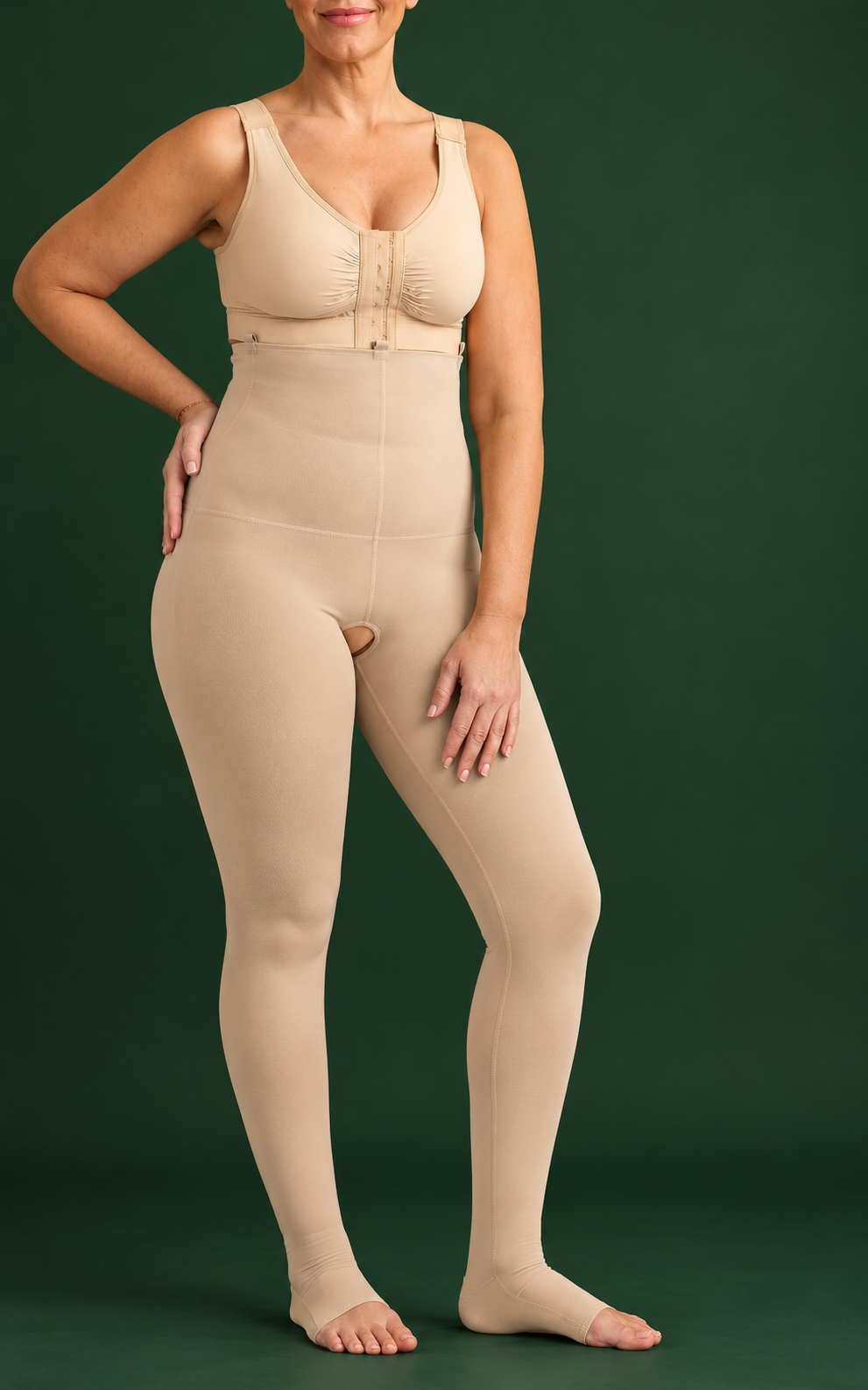
Most surgeons expect patients to try conservative care first, and some insurance plans require it. Conservative care typically includes compression, manual lymphatic drainage (MLD), exercise, and skin care. MLD is a gentle technique that guides fluid toward working lymph nodes. Some surgical centers ask patients to wear flat-knit compression consistently in the weeks before surgery to reduce tissue congestion.
Building Your Baseline
Prehabilitation means preparing your body for surgery. For lipedema, that may include:
- Leg and core strengthening to support mobility after surgery
- Walking or aquatic exercise to build endurance with low joint stress
- Diaphragmatic breathing to support lymphatic flow
- Practicing garment donning and doffing before you are sore and swollen
- Baseline limb measurements and photos to track progress
Planning Your Recovery
Arrange help at home, get your post-operative garments in advance, and schedule post-operative therapy before surgery so you are not searching for care while swollen and sore.
After Surgery: What Recovery Typically Involves
Compression
Compression is central to recovery. Patients usually wear garments nearly continuously in the early weeks, and many continue longer. Your surgeon specifies the garment, the schedule, and when to transition to flat-knit compression.
Lymphatic Drainage and Decongestive Therapy
Liposuction creates significant swelling, and lipedema tissue may already carry extra fluid. A study of 293 patients after lipedema liposuction describes a post-operative program that combined MLD, mechanical lymphatic drainage, compression bandaging, skin care, and education. Your surgeon decides when MLD can begin.
Movement and Return to Activity
Early walking supports circulation and lymph flow. Your therapist will progress you gradually from gentle movement to strengthening as your surgeon allows. Fibrosis, firm or ropey tissue that sometimes develops after liposuction, can also be addressed once your surgeon clears you.
When to Call Your Surgeon
Contact your surgeon promptly for calf pain or one-sided leg swelling, shortness of breath, fever, spreading redness, wound drainage that worsens, or a sudden fluid-filled bulge, which can signal a seroma. Call 911 for chest pain or trouble breathing.
Long-Term Care After Lipedema Surgery
The Lipedema Foundation emphasizes that lipedema is a chronic condition. After surgery, many patients continue some combination of compression, movement, healthy weight management, and periodic lymphatic care. Long-term outcome data are encouraging, with many patients reporting that they need less lymphatic therapy after surgery, but your plan should be individualized.
Lipedema Care at Thera in NYC
At Thera, our physical and occupational therapists treat lipedema before and after surgery, from prehab and garment training to post-operative lymphatic care and return to activity. Our team includes Certified Lymphedema Therapists (CLT) and Certified Cosmetic Surgery Therapists (CCST), and we coordinate with your surgical team. Learn more about our approach to post-surgical recovery.
Every session is one-on-one. Our Midtown Manhattan clinic at 115 West 30th Street is steps from Penn Station, accessible from across New York City and the Tri-State Area.
Lipedema surgery can meaningfully reduce pain and improve mobility, but it works best as one part of a long-term plan. Prepare with conservative care and prehab, follow your surgeon's compression and activity instructions closely, and plan for ongoing lymphatic care afterward. The right team before and after surgery makes a real difference.
If you are considering lipedema surgery or recovering from it, contact our team today to schedule a one-on-one evaluation and build a prehab or recovery plan at our Midtown Manhattan clinic.
No referral needed · NY State allows direct access to PT and OT for up to 10 visits or one month without a physician's script.