
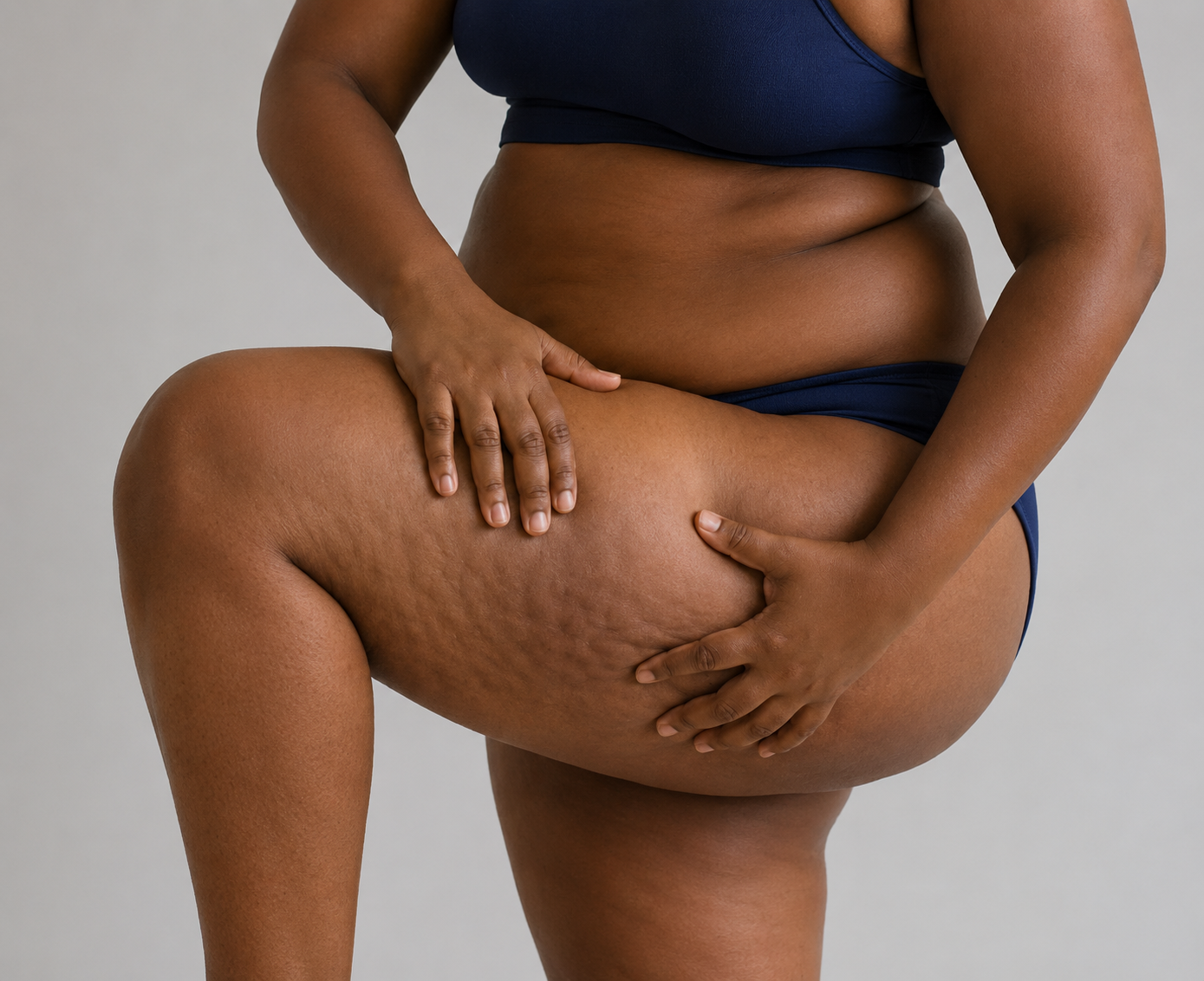
The search often starts with a feeling, not a word. Heavy legs that have never responded to diet or exercise. Pain that seems disproportionate to what you can see. A body shape that changed dramatically during puberty, pregnancy, or menopause and has never returned to what it was. A sense that something is structurally different about the tissue in your hips, thighs, or legs — not just excess weight, but something else that you cannot quite name.
That something has a name: lipedema. It affects a significant proportion of women — the Lipedema Foundation describes it as affecting up to eleven percent of women worldwide — and yet the average patient spends years, sometimes decades, seeking a diagnosis. During that time, they are frequently told that what they are experiencing is simply obesity, poor diet, or insufficient exercise. It is not. And if you are reading this post because something in the description above resonates with your own experience, that recognition matters.
At Thera Physical and Occupational Therapy in Midtown Manhattan, our Certified Lymphedema Therapists are trained to assess for lipedema and can provide a clinical evaluation that gives you an accurate picture of what is happening in your tissue. This guide explains the signs and symptoms of lipedema, how it differs from other conditions, and when to seek professional care.
What lipedema is — and what it is not
Lipedema is a chronic condition involving the abnormal accumulation of fat cells — primarily in the legs, thighs, hips, and sometimes the arms — in a symmetrical, bilateral pattern. Unlike ordinary adipose tissue, lipedema fat is physiologically distinct: it does not respond to caloric restriction the way typical fat does, it is accompanied by pain and tenderness, it bruises easily, and it develops in a characteristic distribution that spares the feet and hands.
Lipedema is not obesity. It is not lymphedema. It is not simply excess weight. It is a structural condition of the fat tissue itself — one that is present from puberty onwards in most patients, worsens during hormonal transitions, and requires specific clinical management that is entirely different from weight management approaches. This distinction matters because patients who are treated for obesity when they have lipedema receive care that does not address their actual condition — and the failure of those interventions is then used to further blame the patient.
The hallmark signs of lipedema
Bilateral, symmetrical distribution — with the feet and hands spared
Lipedema almost always affects both sides of the body equally. Both legs are the same size. Both arms, if involved, are symmetrically affected. This bilateral symmetry is one of the most important distinguishing features — particularly when compared to lymphedema, which typically affects one side more than the other.
Equally important is what lipedema does not affect. The feet and hands are characteristically spared — there is a clearly defined edge at the ankle where the enlarged tissue stops and the normal-sized foot begins. This is called the cuff sign or bracelet sign, and its presence is a strong clinical indicator of lipedema rather than generalized obesity or lymphedema.
Disproportionate size relative to the upper body
Patients with lipedema often have a striking and persistent disproportion between the upper and lower body. The waist may be a normal size while the hips, thighs, and legs are significantly enlarged. This disproportion does not change with weight loss — the upper body may slim while the lower body remains unchanged, or even appears more pronounced in comparison. This is one of the most diagnostically useful features: weight loss that visibly affects the upper body without reducing the lower body is characteristic of lipedema.
Pain and tenderness disproportionate to visible findings
Lipedema tissue hurts — often significantly, and often in ways that seem out of proportion to what you can see. The affected tissue is tender to light touch. It bruises easily with minor pressure — from clothing waistbands, from chairs, from carrying bags. Aching and heaviness in the legs are common, particularly at the end of the day or after prolonged standing. This pain is not mechanical — it is inherent to the lipedema tissue itself, and it does not resolve with weight loss.
Texture changes beneath the skin
When lipedema tissue is gently compressed, it has a distinctive texture — often described as resembling small pearls, rice grains, or a cobblestone surface beneath the skin. This is the lipedema fat organized into nodular deposits within the tissue. As the condition progresses, these deposits become larger and more organized into lobular formations. This texture is distinct from the soft, compressible quality of ordinary adipose tissue.
Hormonal association and triggers
Lipedema typically appears or worsens during hormonal transitions. The most common trigger points are puberty, pregnancy, and perimenopause — times when estrogen levels shift significantly. Many patients can identify a specific hormonal event after which their body shape changed and never fully returned to its prior state. This hormonal association suggests a role of sex hormones in the development and progression of lipedema, though the exact mechanism is still being researched.
Does not improve with diet and exercise
This is one of the most important and most frequently misunderstood features of lipedema. Standard dietary restriction and aerobic exercise do not reduce lipedema tissue. Patients may lose weight in the upper body, the face, and other non-affected areas, while the lipedema tissue remains unchanged or becomes more pronounced relative to the slimmer upper body. This is not a failure of effort or willpower. It reflects the physiological distinction between lipedema fat and ordinary adipose tissue — a distinction that has been consistently documented in the clinical literature.
How lipedema differs from lymphedema and general obesity
- Distribution: Lipedema — bilateral, symmetrical, feet and hands spared | Lymphedema — typically one-sided, starts at hands or feet | Obesity — generalized, no specific pattern
- Pain: Lipedema — significant, disproportionate, bruising easy | Lymphedema — not inherently painful early | Obesity — not a primary feature
- Response to elevation: Lipedema — no change | Lymphedema — improves, especially early | Obesity — no specific effect
- Response to diet and exercise: Lipedema — does not reduce lipedema tissue | Lymphedema — no direct effect on swelling | Obesity — reduces overall fat
- Hormonal trigger: Lipedema — puberty, pregnancy, perimenopause | Lymphedema — not hormone-dependent | Obesity — not hormone-specific
- Stemmer sign: Lipedema — typically negative | Lymphedema — typically positive | Obesity — typically negative
When to seek care
If you recognize several of the features described above in your own experience — particularly the bilateral distribution, the cuff sign at the ankle, the disproportionate lower body size, and the history of pain and tenderness that has not responded to conventional approaches — seeking a clinical assessment is the right next step.
A Certified Lymphedema Therapist at Thera is trained to assess for lipedema and can provide a thorough clinical evaluation — including tissue assessment, a review of your symptom history and hormonal pattern, and a clinical impression of whether your presentation is consistent with lipedema. We can also assess for lipolymphedema if you have features of both conditions, and will refer you to a physician for formal diagnosis if indicated. Learn more about our lymphatic care services.
You do not need a diagnosis in hand before being seen. You do not need a referral. And you do not need to wait until your symptoms are worse to seek care — earlier assessment and earlier treatment consistently produce better outcomes than waiting until the condition has advanced. If you have been told for years that what you are experiencing is simply your weight, and you do not believe that is the full story, it is worth finding out. Contact our team today.
Lipedema is a structural condition of the fat tissue itself — not a failure of diet or exercise, not general obesity, not something patients simply have to accept. Its hallmarks — bilateral, symmetrical distribution sparing the feet and hands; disproportionate lower body size; pain and tenderness; easy bruising; and failure to respond to dietary restriction — distinguish it clearly from other conditions. If you recognize your own experience in these descriptions, a clinical assessment from a therapist trained in lipedema is the most important next step you can take.
If you suspect you may have lipedema and want a clinical assessment in New York City, contact our team today to schedule an evaluation at our Midtown Manhattan clinic.
No referral needed · New York State allows direct access to physical and occupational therapy for up to 10 visits or one month without a physician's script.