
Optimizing Your Mommy Makeover Recovery: A Timeline Guide
Author: Megan McCarthy
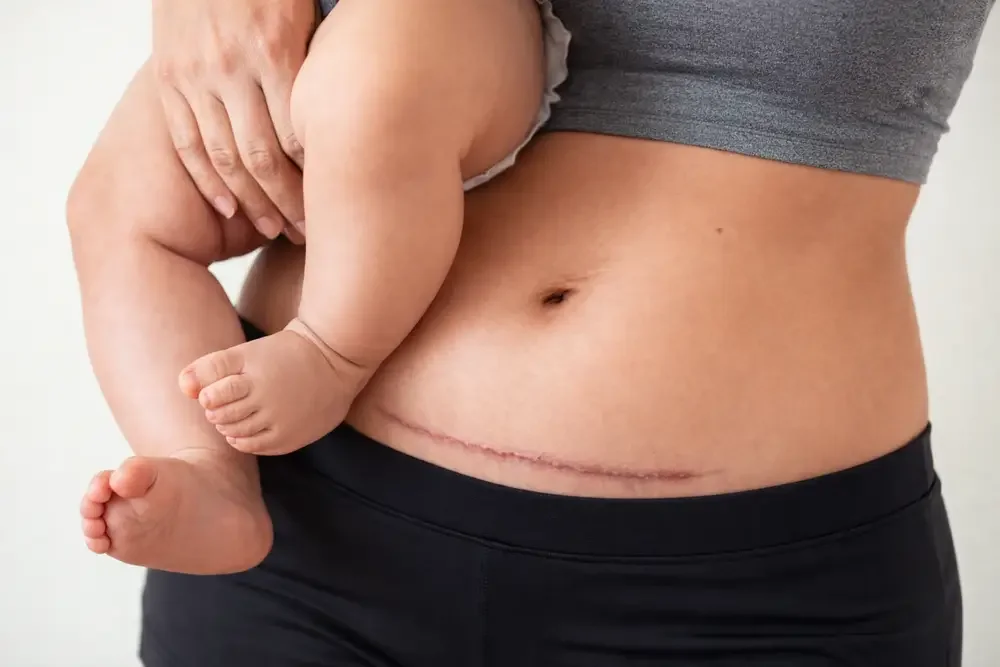
A successful surgery requires more than a confirmed date and initial support. Understanding the daily recovery process, the management of post-operative swelling, and the role of specialized physical therapy ensures an optimal transition to your final results. Most patients recognize the value of targeted rehabilitation only after the healing process begins.
A mommy makeover recovery typically takes six weeks before you return to most normal activities, with full results visible at six to twelve months. Early recovery habits play an important role in how smoothly you heal and how your results evolve.
This week-by-week breakdown explains what to expect and where post-operative physical therapy fits into the clinical timeline.
Why Mommy Makeover Recovery Takes Longer Than a Single Procedure
A mommy makeover combines multiple procedures in a single surgery, most commonly a tummy tuck, liposuction, and some form of breast surgery. Because your body is healing from several procedures at once, the recovery is more involved than recovering from a single operation.
Your timeline will closely follow the recovery of your most extensive procedure. For most patients, that is the tummy tuck, which involves tightening the abdominal muscles and removing excess skin. That is the benchmark used in the timeline below.
Mommy Makeover Recovery Timeline: Week by Week:
-
Generally, this is the most physically demanding week. Swelling, bruising, and soreness are at their highest. You will feel fatigued, and moving around will be uncomfortable, especially in the abdomen. The silver lining is that getting the most difficult part over first makes everything else seem easier.
What to expect: You will go home in a compression garment, which needs to stay on almost all the time. If your surgeon used drains, those will still be in place and require monitoring. You will not be able to stand fully upright if you have had a tummy tuck, and that is normal. Short, slow walks around the house are encouraged to keep circulation moving and reduce the risk of blood clots, but rest is the priority.
You need help. Not as a preference, as a requirement. You cannot lift anything, including small children. Childcare needs to be fully covered for at least this first week.
-
Most patients start to feel more like themselves by week two. The intensity of the first few days passes, and you can move around more comfortably. Swelling is still significant, though.
What to expect: You may be able to stand more upright. Pain medication becomes less necessary. Bruising starts to fade. You are still wearing your compression garment around the clock and still need help with anything physically demanding.
This is also typically when manual lymphatic drainage (MLD) sessions can begin, usually with your surgeon's clearance. Starting MLD at this stage, rather than waiting, makes a meaningful difference in how quickly your swelling resolves and how your results develop.
-
By week three, many patients can return to desk work or light remote work. Energy is coming back. You are more mobile and more independent.
What to expect: Swelling is noticeably reduced but still present, especially in the abdomen. Your compression garment is still important during this phase. You are not cleared for exercise yet. The incisions are healing, but still sensitive.
This is one of the most important windows for MLD and scar management. The tissue under the skin is actively reorganizing during these weeks. Regular MLD sessions during this period help prevent fibrosis (the hardening of tissue that can develop when fluid sits stagnant for too long). Once fibrosis forms, it takes significantly more work to treat.
-
Most patients feel close to their pre-surgery baseline by the end of week six. You are more comfortable, more mobile, and the most obvious signs of surgery are fading.
What to expect: The swelling continues to reduce, though it is not gone. You may be cleared for light exercise depending on what procedures you had. Compression garments may be worn less frequently. Incision lines are still maturing and will continue to do so for months.
-
With your surgeon's clearance, you can begin reintroducing weighted exercise without restrictions. Core work and high-impact activity typically come last, particularly if you had a tummy tuck.
What to expect: Energy is largely back. The visible signs of surgery are mostly gone for outside observers. You still may notice swelling at the end of long days, especially in the abdomen. This is normal and resolves with time.
-
How long does a mommy makeover take to heal completely? For most patients, the answer is six to twelve months. Residual swelling fully resolves, incision lines continue to fade, and the contours from your surgery become their most defined.
What you see in the mirror at six months is close to your final result. What you see at twelve months is it.
The Role of Manual Lymphatic Drainage in Mommy Makeover Recovery
Every surgeon will tell you to rest, wear your compression garment, and take short walks. Fewer will walk you through the clinical case for starting MLD early, what it actually does during cosmetic surgery recovery, and why the person performing it needs to be properly trained.
Here is what MLD does specifically after a mommy makeover.
It reduces swelling faster. Surgery disrupts the lymphatic vessels in the treated areas. Those vessels, which are responsible for draining excess fluid from the tissue, become temporarily overwhelmed. Fluid accumulates, causing the swelling and puffiness that follows surgery. MLD uses gentle, precise hand movements on the skin to manually redirect that fluid toward lymph nodes, the small glands that help drain fluid from your tissue, which are still functioning normally. The result is faster fluid clearance than your body would achieve on its own.
It helps prevent fibrosis. Fibrosis after a mommy makeover is the formation of hardened tissue under the skin when post-surgical fluid sits stagnant and begins to solidify. You feel it as firmness or irregular texture, sometimes described as rope-like or lumpy areas beneath the surface. It is not the same as the incision scar you can see. It develops in the deeper tissue and can affect the smoothness of your final contour. MLD performed regularly in the first weeks after surgery, when the tissue is still actively organizing, significantly reduces the likelihood of fibrosis developing.
It reduces the risk of seromas. A seroma is a pocket of fluid that collects under the skin after surgery. MLD helps keep fluid moving rather than pooling, which lowers the risk of seromas forming.
It supports better contour results. The final shape from a mommy makeover is not determined by surgery alone. It is also determined by how the tissue heals. Swelling that resolves unevenly, fibrosis that develops in certain areas, or fluid that accumulates asymmetrically can all affect what your results look like at six and twelve months. Consistent MLD in the early recovery period supports more even, smoother healing, which means the contour your surgeon created has the best chance of showing through clearly.
It can be started early. MLD can sometimes begin as soon as 48 to 72 hours, depending on your type of surgery and with your surgeon's clearance. Starting early is better than waiting. The tissue is most responsive in the first weeks, and addressing fluid accumulation before it has time to sit is more effective than treating it after the fact.
What Is Fibrosis After a Mommy Makeover?
After surgery, your body sends healing cells and fluid to the treated area. When the lymphatic system is temporarily disrupted and cannot drain that fluid efficiently, some of it can sit in the tissue long enough to start solidifying. The result is areas of firmer, denser tissue that feel different from the surrounding skin.
You might notice it as: lumpy or uneven texture under the skin, areas that feel harder than expected, or a sensation of tightness or restriction in the abdomen or flanks.
Fibrosis is a healing response. But it can be prevented with early MLD, and if it does develop, it can be treated with a combination of MLD, scar mobilization techniques, and specialized manual therapy. The earlier it is addressed, the easier it is to resolve.
Post-Mommy Makeover Physical Therapy and Occupational Therapy: What It Includes at Thera
Post-mommy makeover physical therapy at Thera is not a general wellness program. It is a specialized rehabilitation built around the specific demands of cosmetic surgery recovery.
Sessions include manual lymphatic drainage performed by a therapist trained specifically in post-surgical lymphatic care, compression garment fitting and assessment to make sure your garments are actually doing their job, scar mobilization to manage incision healing and prevent adherence, and fibrotic tissue management if areas of firmness develop.
This is the clinical difference between a spa lymphatic massage and working with a certified specialist. MLD after surgery requires someone who understands and has special training in the drainage pathways that were disrupted by your specific procedures, knows how to adapt technique based on where you are in your healing, and can identify when something needs to be escalated to your surgeon. That is not a standard massage skill set.
At Thera, our therapists specialize in breast rehabilitation, lymphatic care, and post-surgical recovery.
How to Prepare for a Smoother Recovery
A few things that make a significant difference before you even get to surgery day: arrange help at home, have childcare fully covered for the first week at minimum, set up a recovery space where everything you need is accessible without reaching or bending, fill your prescriptions before surgery, and plan your MLD appointments in advance so you are not trying to find a provider while you are in the thick of recovery.
Compression garments matter more than most patients expect. A garment that fits incorrectly, whether too loose or cutting in at the edges, affects how fluid drains and how your tissue heals. Having your garment assessed by a therapist rather than relying on the sizing chart is worth doing.
Frequently Asked Questions:
-
Some patients can begin MLD 48 to 72 hours after surgery, depending on the type of procedure, with their surgeon's clearance. Starting early is better than waiting. The tissue is most responsive in the first two to three weeks, and early MLD produces better outcomes than beginning treatment after swelling has already been present for several weeks.
-
The most significant swelling resolves within the first four to six weeks. Residual swelling, particularly in the abdomen, can persist for several months. Most patients reach their final, settled results between six and twelve months post-surgery.
-
Fibrosis typically feels like firm, hard, or lumpy areas under the skin, most commonly in the abdomen or flanks after liposuction or a tummy tuck. It can also feel like tightness or restriction beneath the surface. It is not the same as your incision scar. If you are noticing these sensations, MLD and manual therapy can help, and earlier treatment is more effective.
-
The number varies depending on the extent of your procedures and how your body responds.. Your therapist will assess your tissue at each visit and adjust accordingly.
-
No. New York State Direct Access allows you to begin physical or occupational therapy without a physician's referral for your first 10 visits or 30 days, whichever comes first. If your surgeon is already involved in your care, your Thera therapist will coordinate with them and provide progress updates.
Your Results Depend on More Than Surgery
The care you receive in the weeks after your procedure shapes what you see at six and twelve months.
Thera's therapists specialize in post-surgical rehabilitation, lymphatic care, and breast rehabilitation, and see patients at their Midtown Manhattan clinic, serving the Tri-State Area. No referral needed. New York State Direct Access allows you to book directly for your first 10 visits.