
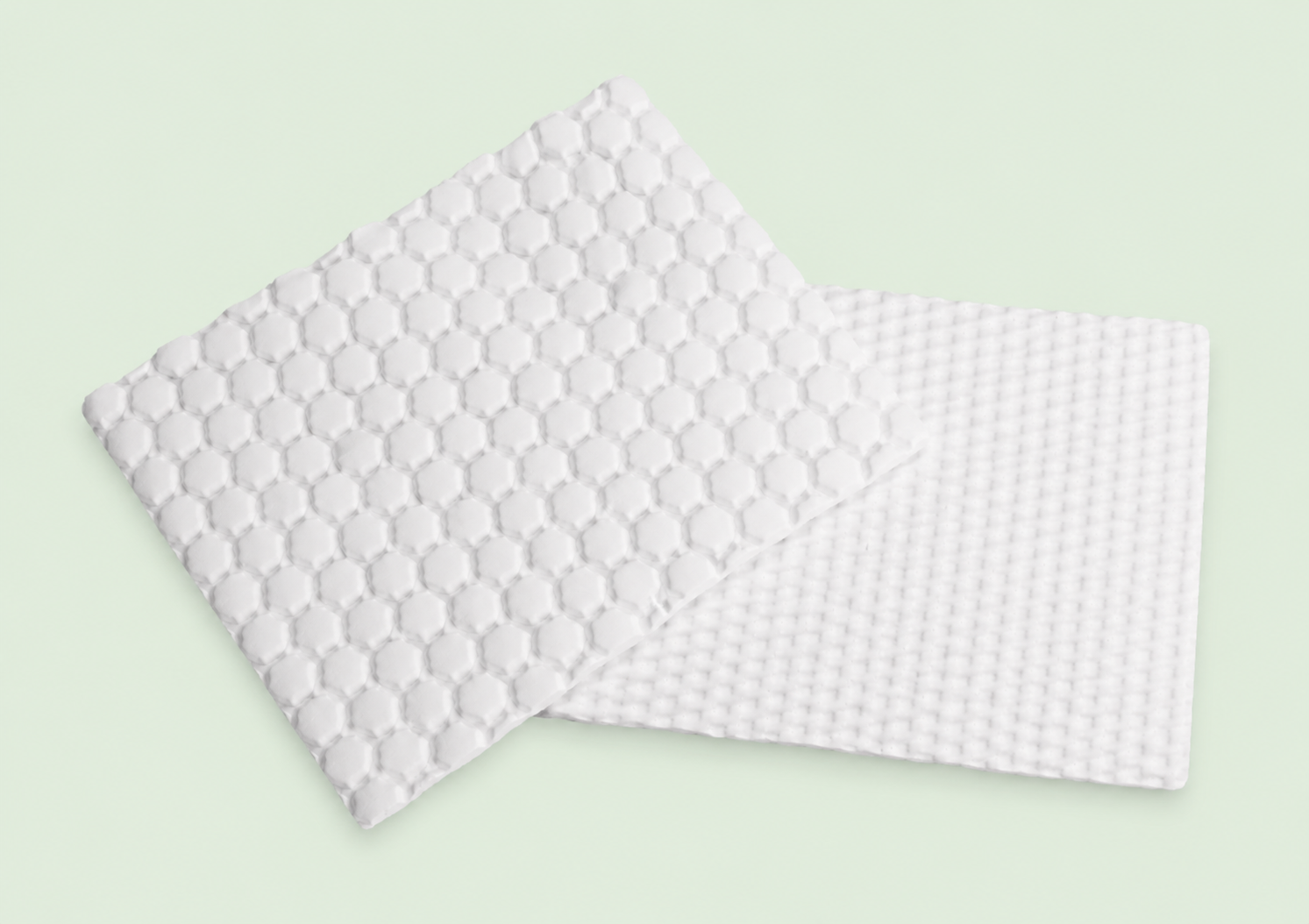
If you are a few weeks out from liposuction and your recovery is being managed by a therapist trained in both lymphatic care and post-surgical rehabilitation, you may have had foam chip bag inserts placed inside your compression garment. You may have also been told to purchase them, or you may be wondering what they are and why your therapist is recommending something that sounds like it belongs in a lymphedema treatment room — because it does.
Chip bags — the soft, irregular foam inserts used in lymphedema therapy — have a well-established role in treating fibrosis after cosmetic surgery. The same properties that make them effective for breaking up fibrotic tissue in lymphedema patients make them equally valuable in the post-liposuction setting. They are not a workaround or a shortcut. They are a clinical tool, and when fitted and applied correctly, they are one of the most effective conservative interventions available for post-surgical fibrosis.
At Thera Physical and Occupational Therapy in Midtown Manhattan, our physical and occupational therapists use chip bag inserts as part of a comprehensive post-operative treatment plan for patients recovering from liposuction, tummy tuck, BBL, and other body contouring procedures. Here is what you need to understand about fibrosis, why chip bags work, and how this technique is used in clinical practice.
What Is Post-Surgical Fibrosis?
Liposuction creates trauma in the subcutaneous tissue — the layer of fat and connective tissue beneath the skin. The body responds to this trauma by activating a healing cascade that includes collagen production. In healthy wound healing, this new collagen organizes itself into functional, pliable tissue. In fibrosis, the collagen becomes disordered — it lays down in dense, irregular bands and nodules that feel hard, rope-like, or lumpy beneath the skin surface.
Post-liposuction fibrosis typically begins developing between two and six weeks after surgery and tends to worsen without intervention. Patients may notice:
- Hard, nodular, or thickened areas in the treated zone
- Rope-like bands that are tender to the touch
- Uneven or irregular contour that was not present immediately after surgery
- Skin that feels stuck or tethered to the tissue beneath it
- Tightness or restricted movement, particularly across the abdomen or thighs
Fibrosis does not resolve on its own in most cases. Without treatment, the scar tissue continues to organize, harden, and potentially tether the skin to deeper structures — affecting both comfort and the final cosmetic result. This is why early, targeted intervention matters. Learn more about our approach to scar management and soft tissue adherence at Thera.
What Are Chip Bags?
Chip bags — also called chip pads or foam chip bags — are small pouches filled with irregular pieces of foam or foam chips of varying sizes and densities. They originate in lymphedema therapy, where they have been used for decades as part of Complete Decongestive Therapy (CDT) to treat fibrotic tissue in patients with chronic lymphedema. The National Lymphedema Network recognizes chip bag padding as an established component of compression-based decongestive therapy.
In the lymphedema context, chip bags are placed inside bandaging or compression garments over fibrotic areas. The irregular foam pieces inside the pouch create an uneven, multidirectional pressure surface — one that shifts and redistributes as the patient moves. This constant, varied pressure against fibrotic tissue stimulates collagen remodeling, softens adhesions, and breaks down the rigid banding that characterizes established fibrosis.
The key mechanism is the same reason they work in post-surgical patients: fibrotic tissue responds to mechanical load. Sustained, multidirectional pressure — the kind that cannot be replicated by a flat foam pad or a uniform compression garment alone — creates the conditions for the disorganized collagen to reorganize into more pliable, functional tissue.
How Chip Bags Are Used After Liposuction
Placement Inside the Compression Garment
Chip bag inserts are placed directly against the skin over the fibrotic area, inside the compression garment. The garment holds the insert in contact with the tissue and provides the external pressure that drives the insert's therapeutic effect. The chip bag itself does not apply compression — the garment does. The chip bag's role is to interrupt the flat, uniform surface of the garment and create the irregular, multidirectional pressure interface that fibrotic tissue requires.
Your therapist will assess the location and character of your fibrosis — whether it is superficial or deeper, nodular or banded, localized or diffuse — and cut or shape the chip bag insert to match the treatment area precisely. Off-the-shelf positioning matters: an insert that is too large may fold or create pressure ridges; one that is too small may not cover the fibrotic zone adequately. This is a clinical fitting decision, not a one-size-fits-all application.
When Chip Bags Are Introduced
Chip bag inserts are not a week-one intervention. In the acute post-operative phase, the priority is managing edema and maintaining even compression to reduce seroma risk. Chip bags are typically introduced once early swelling has begun to consolidate and fibrotic tissue has started to organize — generally around three to six weeks post-surgery, depending on the extent of the procedure and the individual patient's healing trajectory.
Your therapist determines the appropriate timing based on tissue assessment. Starting too early — before the tissue has sufficiently consolidated — can be counterproductive. Starting too late allows fibrosis to become more established and harder to treat. The window between weeks three and eight is typically when chip bag therapy has the greatest impact.
How Long They Are Worn
Chip bag inserts are worn inside the compression garment for extended periods — not just during treatment sessions. The goal is sustained mechanical input to the fibrotic tissue, which means the insert is worn during daily activities, not only when working with a therapist. Your therapist will advise on the appropriate daily wear duration based on your tissue response, garment fit, and skin integrity.
Skin should be monitored regularly. The insert is removed for hygiene, skin checks, and any periods when the garment is off. If you notice persistent redness, skin breakdown, or increased pain from the insert, remove it and contact your therapist before continuing.
Why This Technique Transfers From Lymphedema to Cosmetic Surgery Recovery
Fibrosis is fibrosis, regardless of what caused it. The disordered collagen that accumulates after a lymph node dissection and the disordered collagen that accumulates after liposuction are physiologically the same process — and they respond to the same therapeutic principles. Therapists trained in lymphedema management are already expert in assessing and treating fibrotic tissue, designing compression systems that address it, and understanding how to layer foam and padding to create the mechanical environment that promotes remodeling.
This is one of the reasons that CLT (Certified Lymphedema Therapist) training is directly relevant to post-cosmetic surgery care — not just for patients with lymphatic complications, but for the full spectrum of tissue changes that follow procedures like liposuction. The compression science, the tissue assessment skills, and the manual therapy techniques that CLTs apply to lymphedema patients translate directly and meaningfully into the cosmetic surgery recovery setting.
Our team at Thera holds both CLT and CCST (Certified Cosmetic Surgery Therapist) credentials precisely because this overlap is clinically significant. Learn more about our plastic surgery recovery services and our lymphatic care and wellness program.
What Chip Bags Are Not
Because chip bags have gained some visibility online in the post-surgical recovery community, it is worth being clear about what they are not. They are not the same as using a standard flat foam pad, a lipo board, or a rigid abdominal binder — all of which create uniform pressure rather than the multidirectional, irregular pressure that chip bags produce. They are also not a self-directed home tool in the way that general compression garments are. The fitting, placement, and timing of chip bag inserts requires clinical assessment of the fibrotic tissue to be effective and safe.
Used correctly, under the guidance of a trained therapist, chip bag inserts are among the most powerful conservative tools available for post-liposuction fibrosis. Used incorrectly — in the wrong location, at the wrong stage of healing, or with improper garment fit — they can cause pressure injury or fail to produce any therapeutic benefit at all.
Fibrosis Treatment at Thera in NYC
At Thera Physical and Occupational Therapy, our physical and occupational therapists provide comprehensive post-surgical rehabilitation for patients recovering from liposuction, tummy tuck, BBL, and combined body contouring procedures. Our team's dual training in lymphedema therapy and cosmetic surgery rehabilitation means we approach post-surgical fibrosis with the full depth of compression science and tissue management that this complication requires — including chip bag fitting, manual soft tissue work, and garment coordination throughout your recovery.
Every patient is seen one-on-one. Sessions are never grouped or rushed. We are located at 115 West 30th Street in Midtown Manhattan, steps from Penn Station and accessible from across New York City and the Tri-State Area. If you are developing fibrosis after liposuction — or if you want to begin post-surgical care early enough to prevent it from becoming established — contact our team today to schedule an evaluation.
Chip bag inserts are a clinical tool borrowed directly from lymphedema therapy and applied to post-liposuction fibrosis with excellent results. Placed inside a compression garment over fibrotic tissue, the irregular foam pieces create sustained, multidirectional pressure that promotes collagen remodeling and breaks down the hardened banding that develops in the weeks following surgery. They are not a DIY intervention — they require proper clinical fitting, appropriate timing, and integration into a broader treatment plan. In the right hands, at the right stage of recovery, they are one of the most effective tools available for this complication.
If you are experiencing hardness, nodules, or uneven texture after liposuction, contact our team today to schedule a post-surgical evaluation at our Midtown Manhattan clinic.
No referral needed · New York State allows direct access to physical and occupational therapy for up to 10 visits or one month without a physician's script.